Blog
Fall Skincare From Within: How To Prep Your Skin for Cold Weather

Key Takeaways
- Cold, dry weather can challenge skin hydration and elasticity, especially as lower humidity, indoor heating, and hot showers contribute to moisture loss.
- Collagen and elastin provide complementary skin support. Collagen supports firmness and structure, while elastin supports flexibility, resilience, and bounce.
- Support skin from the inside out with adequate protein, vitamin C, colorful plant foods, omega-3s, hydration, and consistent collagen and elastin supplementation.
As fall rolls in and temperatures and humidity begin to drop, our skin can become noticeably drier, more rough, and even less soft. Add indoor heating, hot showers and less air flow, these colder months can really be challenging for maintaining proper skin health.1
But there are steps we can take to prep our skin for these inevitable changes. While there’s plenty of advice on what to put on our skin, from creams and moisturizers to serums and balms, it’s arguably more important how we support our skin health from the inside.
Supporting youthful skin with an adequate diet, alongside key supplements such as elastin and collagen peptides, can help provide skin support at a much deeper level than topical products alone. Let’s take a look.
Why Cold Weather Takes a Toll on Skin Elasticity and Hydration
We often take our skin for granted, but it’s constantly defending us against the outside world while we carry on with our day. It functions as a protective barrier between us and the outside environment while also keeping moisture in and irritants out.
But cold, dry weather can make maintaining skin firmness and skin hydration more difficult. There are several reasons why fall in particular can be tough on skin:
- Lower humidity, which means less moisture in the air
- Cold temperatures, which dries out skin
- Wind and cold air can mean more dryness and irritation
- Indoor heating, creating even less humid of an environment
- Long, hot showers which can strip away skin’s oils and moisture
At the same time, we are slowly losing collagen and elastin, the main framework of our skin, due to normal skin aging. Cold weather and less moisture can make this loss appear even more prominent, which is why fall can be very challenging for optimal skin health.
How Collagen and Elastin Supplements Support Seasonal Skin Resilience
But don’t lose hope quite yet. We do have tools that can help us fight against these seasonal changes to keep our skin looking fresh and healthy.
Let’s first talk collagen peptides. Think of collagen as the framework that gives skin firmness and strength. Studies have shown that hydrolyzed collagen peptides can improve visible skin hydration, elasticity and reduced skin wrinkling, even after just 12 weeks.2
Next we have elastin. Elastin gives skin its flexibility and bounce. While this compound is less studied, we do have evidence that oral marine-derived elastin supplements can improve skin hydration as well as improve skin elasticity.3
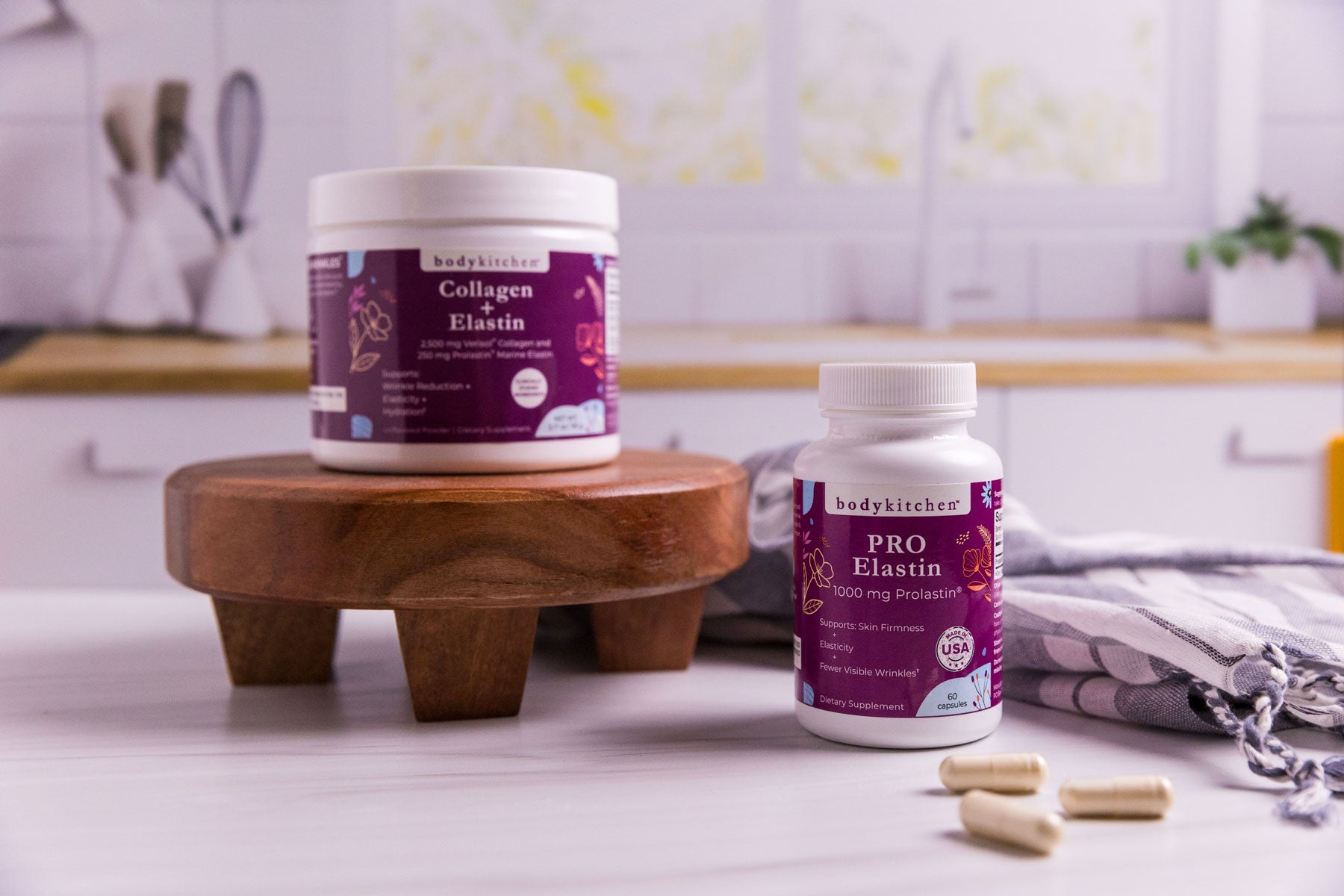
Body Kitchen understands that both offer different yet complementary roles, and that’s why we’ve added Pro-Elastin Peptides to our skin care line up, so you can include this key support alongside collagen peptides for the dual approach your skin needs.
Body Kitchen’s Pro-Elastin provides 1,000 mg of marine-derived elastin peptides per serving and is designed to complement the structural role of collagen. Consider adding it this fall for the extra seasonal support your skin deserves.
The Best Internal Nutrients to Fortify Skin Before Winter Arrives
Don’t forget, even the best skin health supplements can’t outdo good nutrition. Your body needs a whole host of nutrients to build, maintain and protect skin health. Here are key areas to consider:
Adequate protein: Collagen and elastin are proteins, so getting enough dietary protein daily helps provide the amino acids to build and repair these key proteins and so many other functions of skin health. In addition to food sources of protein, collagen peptides can help boost protein intake as well.
Vitamin C: This vitamin is a key cofactor in collagen synthesis, and it also functions as an antioxidant that protects the skin from oxidative stress. Include foods such as citrus fruits, kiwi, bell peppers, and broccoli.4
Colorful plant foods: In addition to vitamin C foods, most plant foods offer an abundance of antioxidants. When you see color in food, what you really see are plant polyphenols, which help cell repair and ward off inflammation. Aim for a wide variety of colorful foods daily to get the most benefit.
Healthy fats: Dietary fats are key to helping maintain skin barrier protection. Omega-3 fats in particular may be especially helpful. A 2024 study found that adding omega 3’s helped improve skin hydration and skin elasticity.5 Fatty fish, walnuts, leafy greens, flax seeds, hemp hearts and tofu are all good sources of dietary omega 3’s.
Building a Fall Skin Prep Routine That Works From the Inside Out
Building the best routine for fall skin health does not need to be complicated. Consistency matters more than adding more and more products to your routine.
Start with these basics:
- Eat protein-rich foods at every meal
- Include vitamin C foods daily
- Eat a variety of colorful plant foods daily
- Eat omega-3 foods several times per week
- Stay hydrated, especially in cold weather
- Consider adding elastin and collagen peptides for daily support
- Continue using a high-quality moisturizer and daily sunscreen to protect the outside of your skin, even in winter
If you decide to opt for adding additional skin support, remember Body Kitchen’s pro-elastin is the perfect complement to collagen peptides. While collagen benefits skin strength, elastin is there for elasticity. Both are key to revitalize dry, dull winter skin.
But remember, as studies suggest, results don’t happen overnight. Think of internal nutrient supplementation as long-term skin health support, not a quick cosmetic fix.
Final Thoughts
The return to cold weather is unavoidable, but dry, dull skin doesn’t have to be. Protect your skin through the fall and beyond with just a few, intentional steps.
Make sure to maintain a nutrient-rich diet with a variety of colorful plant foods, high protein choices, and omega 3 foods. Adding hydrolyzed collagen peptides and elastin peptides may offer additional support, especially when it comes to skin hydration and elasticity that can be challenging in dry, cold weather.
Start supporting your skin the fall before the coldest weather arrives, and you will have a headstart on achieving skin that is firm, hydrated and resilient all season long.
Frequently Asked Questions
Why does skin often look and feel worse in fall and winter?
Cooler air holds less moisture than warm air, and indoor heating further reduces humidity levels, both of which draw water out of the skin and compromise the skin barrier. At the same time, declining sun exposure in fall reduces vitamin D levels, which play a supporting role in skin cell renewal. For people already dealing with reduced collagen and elastin production due to age, the seasonal shift can make dryness, dullness, and fine lines noticeably more pronounced.
How does elastin supplementation help the skin adapt to seasonal changes?
Elastin is the protein that allows skin to flex and return to its original shape, and it plays a key role in how well skin withstands environmental stressors like low humidity and cold air. When elastin levels are supported through supplementation, skin maintains greater resilience and bounce-back even as external conditions become more challenging. An elastin supplement taken consistently in the weeks leading into fall can help build a stronger skin foundation before the harshest drying conditions arrive.
What internal nutrients best support skin through cold weather months?
Collagen and elastin peptides are among the most impactful internal skin nutrients for cold weather resilience. Collagen supports skin structure and volume, while elastin supports flexibility and bounce. Together, they help maintain a skin matrix that is better equipped to hold moisture and resist the thinning and tightening that cold, dry air can cause. Supporting these proteins from within, alongside adequate hydration and vitamin C intake, addresses skin health at a foundational level that topical products cannot reach.
When should someone start taking a skin supplement before fall weather sets in?
Because collagen and elastin supplementation works gradually by stimulating the body's own protein production, starting 6 to 8 weeks before the harshest seasonal conditions arrive allows time for meaningful results to develop. For most people in North America, beginning a skin supplement routine in late summer or early fall provides the lead time needed for skin to be at its most resilient when cold, dry conditions peak in late fall and winter.
Can internal skin supplements replace a good topical skincare routine in fall?
Internal supplements and topical skincare products address skin health through different mechanisms and work best when used together rather than as substitutes for each other. Topical products work primarily on the outer layers of skin to provide immediate moisture and protection. Internal supplements like collagen and elastin peptides work at a structural level to support the deeper dermal layers over time. The most effective fall skin prep strategy combines both approaches for comprehensive coverage inside and out.
Sources

Medically Reviewed By
Elizabeth A. Swick, MS, RDNRegistered dietitian nutritionist focused on evidence-based nutrition and supplementation.