Blog
How Resveratrol and Hyaluronic Acid Work Together to Fight Skin Aging

If you’ve ever perused the skincare aisle or read up on the latest beauty trends, you know how obsessed we all are with preserving youthful skin. And with good reason. Skin can age from so many factors: sun exposure, environmental pollutants, stress, poor nutrition, lack of sleep, etc. Our poor skin gets it from every angle.
But there two key ingredients that help support skin health from within: Resveratrol and hyaluronic acid.
Together, these offer a more complete approach to fighting skin aging. Let’s do a deep dive into how these powerful compounds work and how adding them alongside other skin-supportive nutrients such as collagen and elastin can provide the ultimate defense against premature skin aging.
What Resveratrol Does for Skin at the Cellular Level
You might already know resveratrol as the famous health component in foods such as grapes, berries, peanuts, and red wine. But in the world of skincare and health, it’s celebrated as one of the most potent antioxidant supplements available.1
To understand why resveratrol is so special, we need to look at what causes skin aging in the first place: free radicals and oxidative stress. Everyday exposure to UV light, pollution, stress and even just our body’s normal metabolic processes can create unstable, free radical molecules. Over time, these can damage our skin.
This is where resveratrol comes to the rescue. We have research that suggests resveratrol can help the skin by:1,2
- Neutralizing harmful free radicals
- Calming inflammation
- Improving cellular longevity
All of these functions help improve skin health from within, laying a healthy foundation at a cellular level so your skin can repair and shine.
How Hyaluronic Acid Supports Skin Hydration and Volume from Within
If resveratrol is your skin’s defense system, hyaluronic acid is the master hydrator. Hyaluronic acid, found in abundance in our skin and joints, helps to retain moisture in the skin, holding up to 1,000 times its weight in water.3
When we are young, our skin is naturally plump and smooth because our cells produce plenty of hyaluronic acid. However as we age, these levels start to drop, leading to dryness, less skin elasticity, and a dull, tired appearance. And sometimes this all looks even worse simply because we lack internal moisture.
But the good news is we can add hyaluronic acid to help reverse these trends.
A study in 2023 found that taking oral hyaluronic acid can improve skin hydration in just 4-8 weeks and improve skin thickness in 12 weeks.4 And another study in 2025 saw similar results on skin hydration and skin elasticity with doses ranging from 1-10g per day.5
While we need more studies on this topic, it looks like oral hyaluronic acid can be an easy way to boost to skin health.
Why Resveratrol and Hyaluronic Acid Are More Effective Together
Using resveratrol and hyaluronic acid on their own can certainly provide skin health benefits, but combining them could provide even more powerful synergistic effects. Think of them like a skincare duo: one protects the structural integrity of the skin while the other attracts and retain moisture.
Here’s just a few of the ways this can work:1-3
- Skin protection: Resveratrol can fight environmental stressors while hyaluronic acid replaces lost moisture, creating stronger, more resilient skin.
- Improved skin cell function: Hydrated cells with antioxidant support are better able to repair and ward of damage.
- Aging defense: Resveratrol can literally slow down cell aging while hyaluronic acid can target the visible signs of skin aging like fine lines and sagging.
Together, they tackle skin health from all angles, preventing future damage while actively improving your current skin’s condition and appearance.
How Collagen and Elastin Complete the Anti-Aging Skin Formula
You might think we have all the bases covered, but there’s one more piece to this puzzle: structural support.
And that’s where two vital skin health proteins comes in: collagen and elastin. Collagen gives skin its strength and firmness, while elastin keeps it tight yet elastic. Collagen and elastin start to break down as early as our mid-twenties, so incorporating these two foundational proteins are key for a truly complete regimen to fight skin aging.6
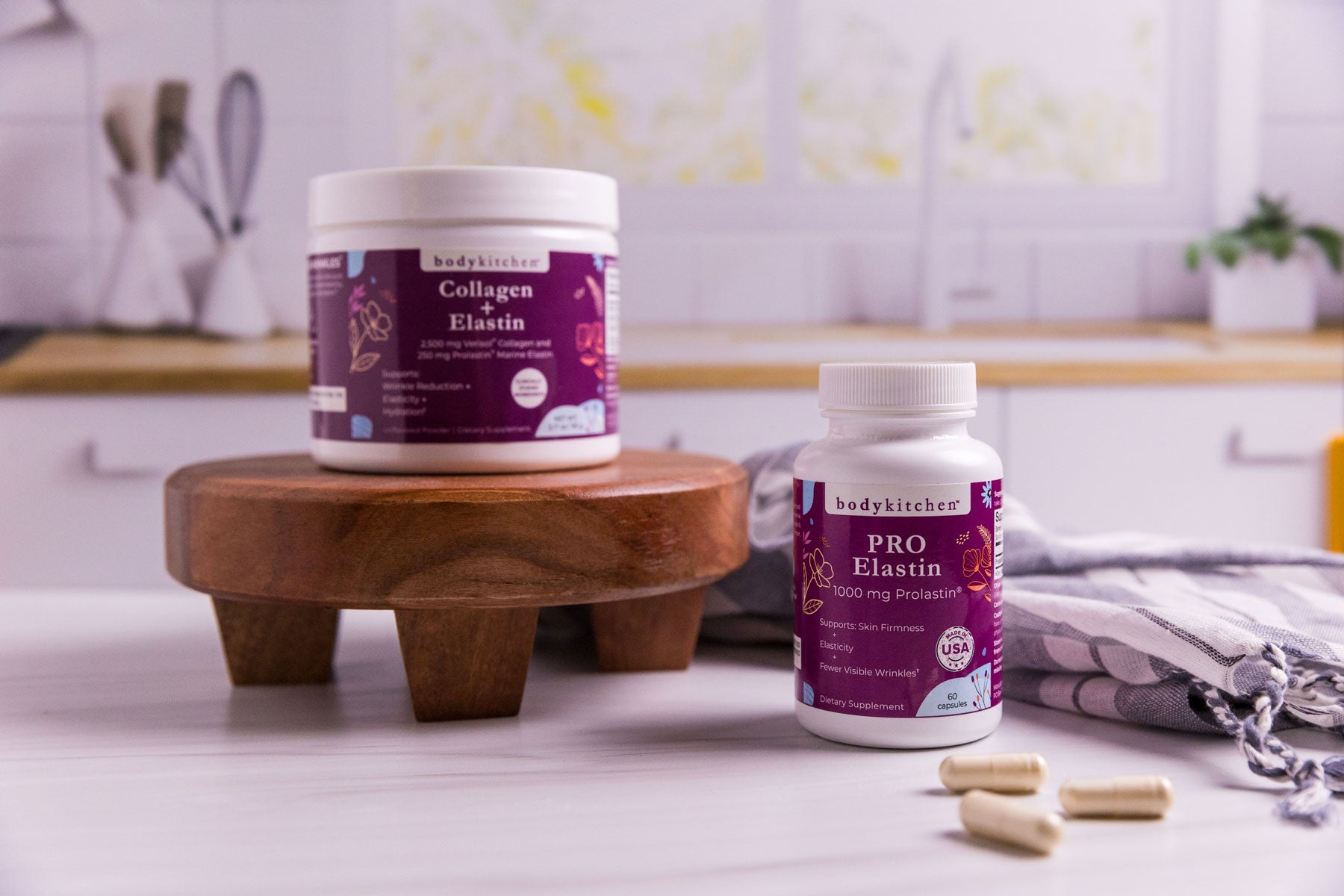
A simple and effective way to incorporate these structural proteins alongside your hydration and antioxidant supplements is to simply take them altogether. And that’s where Body Kitchen’s Collagen Elastin Powder comes in. We take out the guesswork by combining everything you need in one easy product.
Body Kitchen’s formula provides concentrated collagen and elastin, along with resveratrol and hyaluronic acid, so you can cover every single angle of skin health without even thinking. Hydration, antioxidant defense, structure and firmness … check. Done and done.
Final Thoughts
Achieving healthy, glowing skin as you age does not have to mean buying dozens of products. By pairing your daily routine with a comprehensive formula like Body Kitchen’s Collagen Elastin Powder, you can ensure your skin has the extra boost it needs to keep it looking youthful, resilient and glowing.
Resveratrol neutralizes cellular damage, hyaluronic acid helps retain critical moisture, and collagen and elastin provide the framework that keeps everything lifted and plump. It’s an all-in-one formula that maximizes results without overcomplicating your life.
Start treating your skin to what it deserves, a complete skin health routine that works from the inside out.
Frequently Asked Questions
1. What is resveratrol and what does it do for aging skin?
2. How does hyaluronic acid contribute to younger-looking skin when taken as a supplement?
3. Why do resveratrol and hyaluronic acid work well together for skin aging?
4. How does the Collagen and Elastin Powder support resveratrol and hyaluronic acid activity?
5. How long does it take to see skin improvements from a supplement combining these ingredients?
References:

Medically Reviewed By
Elizabeth A. Swick, MS, RDNRegistered dietitian nutritionist focused on evidence-based nutrition and supplementation.