When it comes to hydrated, glowing skin, few ingredients live up to the hype like hyaluronic acid. In the beauty world you will find it everywhere, from high-end creams to the best hyaluronic acid serum products found in stores and online.
But what does hyaluronic acid do and how does it work? And how should you use it to maximize your skin’s health and appearance?
Let’s look at hyaluronic acid benefits and break down the science behind this small but mighty molecule.
Understanding This Molecule’s Role in Hydration and Plumpness
Hyaluronic acid is a naturally occurring polysaccharide found throughout the body, providing key support to the skin, joints and eyes. Its primary role is maintaining hydration and supporting the structure of tissues.1
In the skin, hyaluronic acid acts like scaffolding, maintaining the skin’s firmness and structure while also providing hydration and elasticity. Unfortunately, hyaluronic acid levels start to decrease with age, UV exposure and environmental stress. Research suggests hyaluronic acid levels peak by age 25 and begin to decline thereafter, gradually leading to dryness, fine lines, and loss of volume.1
It's this decline that helps explain why hyaluronic acid benefits are so crucial – it helps restore hydration and overall structure to aging or damaged skin.
How Hyaluronic Acid Attracts and Retains Water
Hyaluronic acid is often referred to as a “moisture magnet,” and for good reason. Its superpower is being able to absorb and retain a significant amount of water, which helps the skin in many different ways.
When applied topically or ingested orally, hyaluronic acid gets into the dermis of the skin and draws water in. This leads to:2
- Improved skin hydration
- Enhanced elasticity
- Smoother, more vibrant skin
It’s this mechanism that makes hyaluronic acid a key ingredient in dry skin moisturizers, but it’s also suitable as a moisturizer for oily skin, since it hydrates without clogging pores or causing additional oil production.
And even more importantly, hydration doesn’t just help skin look better – it improves barrier function, which helps protect against environmental damage and inflammation.3
Benefits of Topical Hyaluronic Acid for Wrinkles and Fine Lines
One of the most immediate hyaluronic acid benefits is on fine lines and wrinkles.
Numerous studies have shown that hyaluronic acid can help improve skin smoothness, elasticity and appearance of wrinkles with consistent use.4 While hyaluronic acid does not make up for or take the place of lost collagen, it creates a more hydrated environment that allows skin to look and feel refreshed and rejuvenated.
Hyaluronic acid benefits wrinkles and fine lines by:5
- Plumping the skin by retaining moisture
- Improving skin texture
- Reducing the appearance of wrinkles associated with dryness
- Enhancing the glow and vitality of the skin
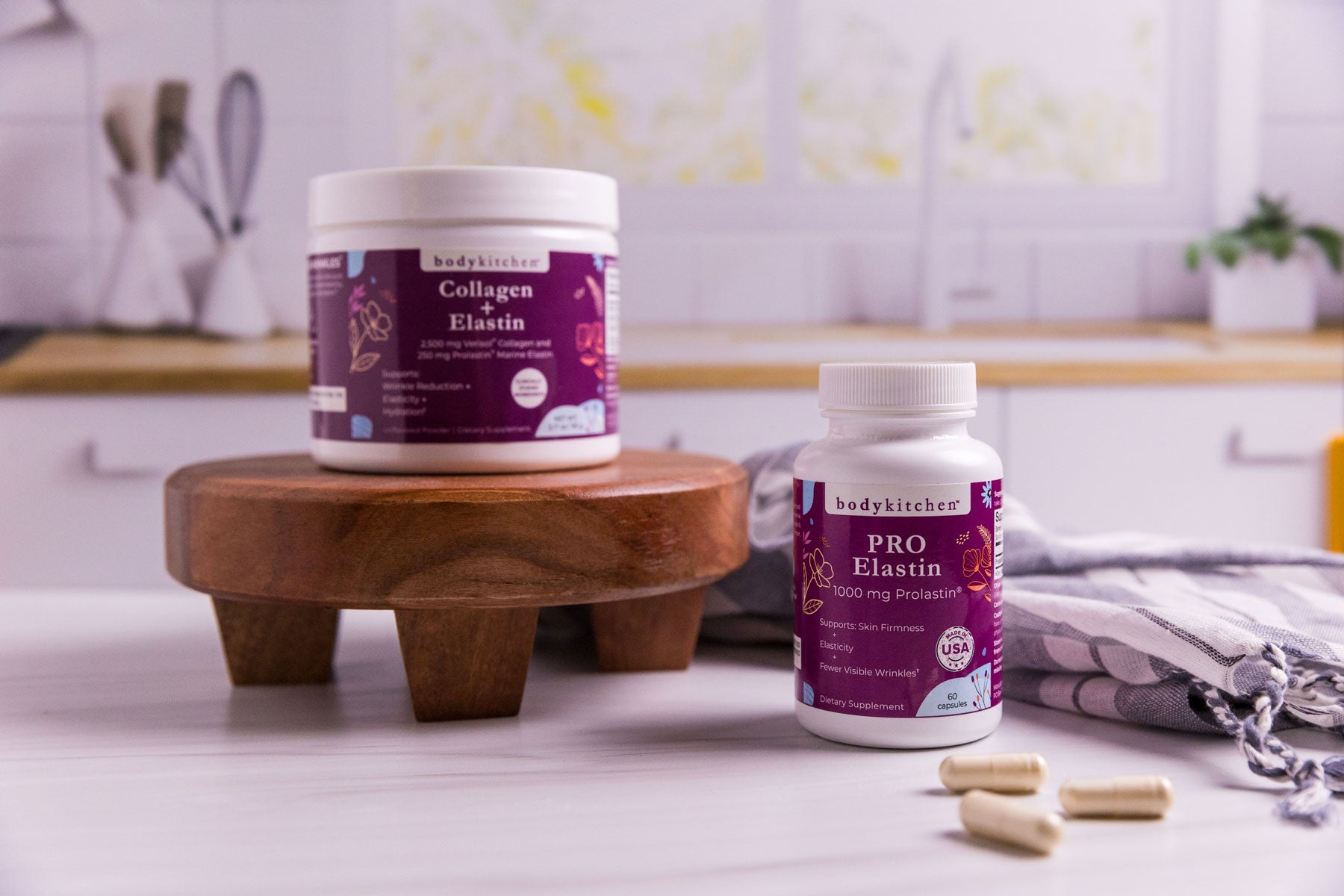
Body Kitchen’s Youthful Beauty Advanced powder is a great choice for skin that is starting to show signs of fine lines and wrinkles, offering hyaluronic acid along with collagen and other skin-supportive nutrients for a comprehensive anti-aging approaches.
Selecting the Best Hyaluronic Acid Serums
While many topical forms of hyaluronic acid are effective, not all serums are created equal. Choosing the best hyaluronic acid serum depends on formulation, molecular weight, and how its applied.
Here’s what to look for:6
- Molecular Weight
Low-molecular weight hyaluronic acid penetrates deeper into the skin, while higher-weight formulations sit closer to the surface and provide more immediate hydration. Formulas that offer both types tend to deliver more comprehensive support. - Supporting ingredients
Hyaluronic acid works best with other skin-supportive nutrients such as antioxidants, niacinamide and ceramides. Look for a multi-targeted product to get the most bang for your buck. - Proper application
Research suggests hyaluronic acid absorbs best on damp skin, so apply some light moisture before applying. Applying to dry skin may pull moisture out of the skin, which is obviously not the intent.
Overall, the best moisturizers for dry skin have hyaluronic acid included, along with other ingredients to help your skin thrive.
Maximizing Skin Plumpness with Internal Hyaluronic Acid Sources
While topical skincare products are essential, skin hydration starts from within. Research suggests that oral hyaluronic acid supplementation can also support skin moisture, elasticity and wrinkle reduction over time.7
Unlike topical hyaluronic acid serum, taking this compound as a powder or supplement appears to support hydration internally, benefiting skin from the inside out.
That is why Body Kitchen’s unique Youthful Beauty Advanced powder provides the full line-up of anti-aging and skin restoring ingredients. It combines hyaluronic acid with collagen and other nutrients to provide hydration support internally, which complements your topical skincare routine.
Combine this with a healthy, anti-inflammatory diet and regular exercise, and you have a winning routine for healthy skin for years to come.
The Bottom Line
There’s no way to defy the aging process, but adding topical and internal skin support, such as hyaluronic acid, is a proven way to increase moisture to the skin and prevent signs of aging.
Whether you choose to use a hyaluronic acid serum, a high-quality comprehensive moisturizer for dry skin, or prefer to support your skin’s youthfulness from within with Body Kitchen’s Youthful Beauty Advanced powder, all of these tools can help you achieve a lasting, youthful glow.
But the real key is a multi-targeted approach, with both topical and internal options to maximize effectiveness. If your anti-aging skin routine only relies on topical creams and serums, consider rounding out your approach with Body Kitchen’s Youthful Beauty Advanced -- for results that are backed by science.
References:
- https://pubmed.ncbi.nlm.nih.gov/40277717/
- https://pmc.ncbi.nlm.nih.gov/articles/PMC8322246/
- https://pubmed.ncbi.nlm.nih.gov/29229630/
- https://pubmed.ncbi.nlm.nih.gov/37373443/
- https://pmc.ncbi.nlm.nih.gov/articles/PMC12026949/
- https://pubmed.ncbi.nlm.nih.gov/34176098/
- https://pubmed.ncbi.nlm.nih.gov/38009035/