Blog


Summer Immunity: Why Your Immune System Still Needs Support in Warm Weather
When we think about immune support we usually think about protecting ourselves during the long, cold winter months. Once summer arrives, it’s easy to assume that our immune system can finally take a vacation too. But did you know that our immune function can take a dip in the summer, too? Summer brings its own set of immune stressors such as travel, disrupted sleep, diet changes, seasonal allergies, and environmental toxins like wildfire smoke. These factors can increase oxidative stress and inflammation, potentially making your body more prone to illness or just not feeling well. A well-balanced diet and self-care are just as important in summer as winter, and certain nutrients and antioxidants can provide continual support all year long. For extra support, especially in summer, two key immune system supplements stand out: n-acetyl-cysteine, also known as NAC, and quercetin. Let’s break down why. Why Summer Weather Does Not Mean a Break for Your Immune System Even after winter is well over, viruses continue to spread throughout the year. Summer fun can increase exposure to viruses and bacteria as we travel through airports, use crowded transportation, and attend large social gatherings. At the same time, many summer habits can challenge our immune system. Things like: Late nights Varied sleep schedules Time zone changes Increased sugar and alcohol intake Less structured mealtimes Poor hydration Sun exposure Pollen and mold The list is quite extensive. This does not mean these subtle changes will make you sick, but the more demand you put on your body during summer stresses the immune system and can increase oxidate stress. Supporting the body’s antioxidant ability to fight against this is key. To keep the fun going, good self-care and some key supplementation is a smart strategy. How NAC Supports Glutathione Production and Year-Round Immune Defense So let’s talk about NAC. NAC benefits the body by helping it to produce glutathione, which is known as our master antioxidant. Glutathione is king when it comes to antioxidants because it plays a lot of roles. Research continues to connect healthy glutathione status with better immune function and protection against oxidative stress.1 We know that glutathione:1,2,3 Provides antioxidant defense Helps with cellular repair Supports detoxification Aids in regulating immune function. So why not supplement with glutathione directly? Unfortunately, it is hard to keep glutathione stable in supplement form. Research has shown that the best way to boost glutathione stores is by increasing cysteine, and using an NAC supplement is an ideal way to do that.3 Body Kitchen’s NAC + Quercetin provides 600mg of NAC per serving, which research has shown to be effective in boosting glutathione levels.4 Quercetin’s Role in Managing Seasonal Allergies and Inflammation What is quercetin? Quercetin is another potent antioxidant. It’s naturally found in several types of foods such as onions, berries, apples, grapes and tea, but it’s also available as an immune support supplement.5 Quercetin benefits the body in some interesting ways. In addition to lowering inflammation, research has shown it has the unique ability to help with managing seasonal allergies by reducing the release of histamine.6 Histamine is a normal part of the body’s immune response, but some people produce an excessive amount in response to pollen or other environmental allergens. This can lead to symptoms such as: Watery eyes Itchy skin and eyes Sneezing Nasal congestion Runny nose While studies have found that quercetin can help with reducing the symptoms associated with histamine, it’s good to remember it’s definitely not a cure. But it can help manage symptoms and improve quality of life during allergy season.7 Additionally, studies suggest that when quercetin is used alongside NAC, the anti-inflammatory effects may even be more powerful.8 Body Kitchen’s Mega NAC + Quercetin provides 600mg of quercetin alongside NAC to provide you the best summer defense against seasonal allergies and general inflammation that can come from fun in the sun. Building a Summer Immune Routine with NAC and Quercetin Creating a summer wellness routine doesn’t have to be complicated. Start with the basics first, then add immune support supplements if needed. 1. Maintain a healthy dietEating right is the key to staying healthy all summer long. Some fun foods here and there are fine, but don’t forget to regularly eat foods high in antioxidants and fiber. These are found in fresh fruits and vegetables which are abundant in summer, so take advantage. 2. SleepYou will enjoy your summer to the max if you are well rested. Plus, your immune system will thank you. Aim for at least 7-8 hours per night on average. 3. HydrationThe heat can dry up your cells and zap your energy. Get at least 8 cups of water per day, but add more if sweating heavily or doing a lot of exercise. 4. ExerciseMovement can also boost the immune system and your energy, so don’t slack on regular physical activity during the summer. Add more outdoor activities if you can, but don’t forget the sunscreen! 5. SupplementsIf you fall behind on any of these or feel that your body just needs a boost, NAC and quercetin can be the perfect complement to your health routine. Remember: NAC supports glutathione production to bolster your total antioxidant capacity Quercetin can help reduce histamine and reduce inflammation These two together could be the ideal combo to maximize your summer fun. Before adding any new immune system supplements to your routine, be sure to discuss first with your trusted healthcare practitioner, especially if you are pregnant, breastfeeding, or managing a health condition. Final Thoughts Summer may feel more relaxed, but your immune system continues working every day. By combining good nutrition, hydration, restorative sleep, movement and carefully selected supplements, such as Body Kitchen’s Mega NAC + Quercetin, you can support your body throughout the summer and every season to come. Frequently Asked Questions Why does the immune system still need support during summer? Many people associate immune challenges with cold and flu season, but summer brings its own set of stressors. Increased UV exposure generates free radicals that create oxidative stress throughout the body, including in immune cells. Travel, disrupted sleep, dehydration, and exposure to seasonal allergens all place additional demands on the immune system. Without consistent nutritional support, immune function can become compromised even in warm weather months. What role does NAC play in supporting immune health? NAC (N-Acetyl Cysteine) is a precursor to glutathione, the body's most powerful internal antioxidant. Glutathione plays a central role in immune defense by neutralizing free radicals, supporting white blood cell activity, and helping the body clear toxins. During summer, when oxidative stress from UV exposure and heat is elevated, maintaining healthy glutathione levels through NAC supplementation provides the immune system with a stronger foundation to respond to environmental challenges. How does quercetin support the immune system in summer specifically? Quercetin is a plant-based flavonoid with potent antioxidant and anti-inflammatory properties that make it especially useful during allergy-heavy summer months. It helps stabilize mast cells, which are responsible for triggering allergic responses, and supports a balanced inflammatory reaction to environmental triggers like pollen, pollution, and UV radiation. Quercetin also supports respiratory function, which can be taxed by summer air quality and seasonal allergens. Can you take NAC and quercetin together for immune support? Yes, and the combination is considered particularly effective. NAC and quercetin work through complementary pathways: NAC boosts internal antioxidant capacity via glutathione, while quercetin provides direct free radical neutralization and anti-inflammatory activity. Together they offer broader immune and antioxidant coverage than either ingredient alone. Body Kitchen's Mega NAC + Quercetin formula is designed to deliver both in a single, convenient supplement. Who should consider an immune support supplement during the summer months? Anyone who spends significant time outdoors, travels frequently, struggles with seasonal allergies, or notices their energy and resilience dip during summer is a good candidate for year-round immune support. Adults over 40 may benefit especially, as immune function and antioxidant production naturally decline with age. A supplement combining NAC and quercetin offers a science-backed way to maintain strong immune defenses regardless of the season. References: https://pubmed.ncbi.nlm.nih.gov/35975308/ https://pubmed.ncbi.nlm.nih.gov/39632267/ https://pmc.ncbi.nlm.nih.gov/articles/PMC9730326/ https://onlinelibrary.wiley.com/doi/10.1155/2021/9949453 https://pubmed.ncbi.nlm.nih.gov/35458696/ https://pubmed.ncbi.nlm.nih.gov/35776034/ https://pubmed.ncbi.nlm.nih.gov/36938614/ https://pubmed.ncbi.nlm.nih.gov/37575276/

The Science of Skin Hydration: How Hyaluronic Acid Works From Within
We often look to maintain youthful skin with surface-level products. We add creamy moisturizers, hydrating serums and other potions to fortify the outer layers. These can certainly help, but true skin health depends on what is happening beneath the surface. One compound that is known for improving skin hydration and skin elasticity is hyaluronic acid. Although it is common to find this in topical serums and even injectable fillers, it’s also naturally produced within the body. Hyaluronic acid helps retain moisture within the tissues, improves the structure of the skin, and even helps with joints.1 Let’s take a closer look at what the science says about this important compound and particularly why pairing it with collagen supplements could be your complete solution for long-lasting, deep hydration from within. What is Hyaluronic Acid and Why Does the Skin Need It? Hyaluronic acid is a naturally occurring molecule in our body that is uniquely capable of binding and holding onto water. It’s found throughout the body but most of it is concentrated in the skin where is supports proper skin hydration.1 Within the skin, it helps maintain moisture in the deep dermal layers and surrounding tissues. This increased hydration results in youthful skin that is softer, smoother and more flexible. Unfortunately, hyaluronic acid levels naturally decrease as we age. As these levels decrease over time, we can see more signs of skin aging such as:2 Dryness Less bounce and elasticity Increased fine lines Dull appearance Of course, some aging is inevitable as skin health is also influenced by factors such as genetics, sun exposure, diet, sleep and stress. But supporting optimal skin health with the right skin health supplements may be one way we can take back control and have youthful skin for years to come. How Oral Hyaluronic Acid Reaches the Skin Differently Than Topical Products If you walk down the beauty aisle, you will find countless serums claiming to penetrate and hydrate the skin using hyaluronic acid. But there is one major scientific obstacle to skin hydration that these topical products face: the skin barrier itself. Think about it. Our skin is really good at keeping things out. And thankfully so, because strong skin protects us from the outside world. So penetrating that force field to support skin health is no easy task. Additionally, in order for hyaluronic acid to even begin its work, it needs to get to the deep layers of the skin, and this is challenging as well. Very small molecules may be able to get through and absorb, but larger ones are simply too big to make it that far.3 What that means is that many topical products will be just that … topical. They sit on the skin, not really doing much of anything. For lasting skin hydration we need a different approach, one that hydrates the skin from within. Cue oral hyaluronic acid, aka hyaluronic acid supplements. Studies show that these supplements for skin health may help with:4 Getting broken down by your own digestive process so they are more easily absorbed Penetrating the deep layers of the skin Improving skin hydration, elasticity and thickness So while topical serums can still be great for providing immediate surface hydration, hyaluronic acid skin health supplements may provide longer-term support from within. The Evidence Behind Hyaluronic Acid Supplementation for Skin Hydration Research on oral hyaluronic acid supplements is still developing, but the results so far have been encouraging. A recent study looking at both young and older people using oral hyaluronic acid saw noticeable improvements in skin elasticity, skin hydration and overall skin thickness in less than 12 weeks.4 Another analysis reviewed a number of previous studies and found overall, oral hyaluronic use was associated with improvements in skin elasticity, wrinkle depth, and hydration. The authors noted that hyaluronic acid was potentially a “valuable component” in a comprehensive skin care routine.5 These findings suggest that oral hyaluronic skin health supplements may be a helpful addition to a well-balanced regimen to prevent skin aging, especially for adults experiencing dryness or other age-related changes. Pairing Hyaluronic Acid with Collagen for Complete Skin Support So you might be asking, but what about collagen? Isn’t that also touted for optimal skin health and preventing fine lines and wrinkles? Yes, you are right, both of these compounds are important considerations when it comes to your overall skin health routine. While hyaluronic acid promotes hydration, collagen is adding additional strength and firmness to the inner layers of the skin.6 Think of hyaluronic acid as keeping the skin moist and elastic, while collagen comes into provide the strong framework underneath. They work in tandem. But just like hyaluronic acid, collagen also breaks down with age, and studies suggest oral supplementation can help improve skin structure and firmness and prevent the visible signs of skin aging. That’s why Body Kitchen makes this easy. By providing collagen and hyaluronic acid in our Youthful Beauty Advanced powder, you get everything you need for complete skin health support all in one package. Final Thoughts Topical skincare will always have a place in our daily routines for protection and surface-level smoothing. However, if your goal is long-term skin aging prevention, you must support your skin from within. Consider adding Body Kitchen’s Youthful Beauty Advanced to create a strong, hydrated foundation that will give you youthful skin for years to come. Frequently Asked Questions What is hyaluronic acid and what does it do for the skin? Hyaluronic acid is a naturally occurring molecule found throughout the body, with the highest concentrations in the skin, joints, and eyes. Its primary function is to attract and retain water, with a single molecule capable of holding up to 1,000 times its weight in moisture. In the skin, hyaluronic acid keeps tissue hydrated, plump, and resilient. Production of this molecule declines with age, which contributes to dryness, loss of volume, and the formation of fine lines. How does oral hyaluronic acid work differently from topical hyaluronic acid serums? Topical hyaluronic acid works primarily on the skin's surface, drawing moisture from the surrounding environment into the outer layers of skin. It cannot penetrate deeply enough to reach the dermis where structural hydration occurs. Oral hyaluronic acid, by contrast, is absorbed through the gut and delivered via the bloodstream to the deeper layers of skin tissue. This internal delivery supports hydration at a structural level, complementing what topical products can achieve from the outside. Can taking a supplement with hyaluronic acid actually improve skin hydration? Clinical research supports that oral hyaluronic acid supplementation can lead to measurable improvements in skin moisture content, smoothness, and the reduction of fine lines. Studies have shown that consistent daily intake of low-molecular-weight hyaluronic acid results in increased skin hydration and reduced dryness within 4 to 8 weeks. The key is bioavailability: smaller molecular weight forms are absorbed more readily and are more likely to reach skin tissue effectively. What other ingredients work alongside hyaluronic acid to support skin hydration? Collagen peptides and hyaluronic acid are a particularly effective pairing for skin hydration. Collagen provides the structural protein framework that keeps skin firm and elastic, while hyaluronic acid fills that matrix with moisture. Vitamin C is also important, as it is essential for collagen synthesis and acts as an antioxidant that protects skin cells from oxidative damage. Together, these ingredients support skin hydration and resilience more comprehensively than any single ingredient alone. Who is most likely to benefit from a supplement containing hyaluronic acid for skin? Anyone experiencing dry, dull, or dehydrated skin, particularly adults over 30 who are noticing early signs of volume loss or fine lines, is a strong candidate for oral hyaluronic acid supplementation. It is especially relevant for those in dry climates, frequent travelers, or individuals whose skin feels tight or lacks plumpness despite adequate water intake. A supplement that combines hyaluronic acid with collagen peptides addresses both hydration and structural skin support in a single daily routine. References: https://pmc.ncbi.nlm.nih.gov/articles/PMC8347214/ https://pubmed.ncbi.nlm.nih.gov/36200921/ https://pubmed.ncbi.nlm.nih.gov/32038748/ https://pmc.ncbi.nlm.nih.gov/articles/PMC10661223/ https://pubmed.ncbi.nlm.nih.gov/40911749/ https://pmc.ncbi.nlm.nih.gov/articles/PMC8824545/

Beyond Green Tea: 6 Surprising Superfoods That Turn Back Time
You've memorized the top "longevity foods", dutifully stock your fridge and pantry with wild-caught salmon, green tea and blueberries, and worked them into your regular routine. But don't stop there! Hyper-focusing on the most famous superfoods can work against you by ignoring an entire cast of unexpected age-defying nutritional giants hiding in plain sight at the grocery store. And nature's intelligence is not only found in the produce aisle or fresh food case as you have been told for decades. In fact, there are plenty of powerhouses tucked away in ordinary, overlooked ingredients that are densely packed with molecules that renovate cells from the inside out. From unfamiliar fruits and flavor garnishes to common sauce bases, get to know the unsung heroes of healthy eating and why they deserve to be on your shopping list: Papaya, Natural Collagen Booster Power compound: Papain This vibrant tropical fruit is summer's unsung hero, with its high concentration of papain, a brilliant proteolytic (protein-digesting) enzyme. When consumed, papain optimizes your digestive tract, helping your body to efficiently break down and utilize the amino acids necessary for collagen matrix repair. This is why papaya is the perfect skin food! It acts as an internal catalyst, accelerating cellular turnover so that fresh, resilient skin can surface from the inside out. Pineapple, Nature's Wound Healer Power compound: Bromelain You can feel this juicy fruit working the moment it touches your mouth. That tingling, prickly feeling is the result of bromelain, a remarkable enzyme that breaks down proteins fast, and the juice's acid irritating the exposed area. Not only does bromelain act as a digestive enzyme, but it's also renowned in clinical circles for its ability to reduce swelling and bruising, and promote wound healing.1, 2, 3 It helps by reducing swelling and puffiness, breaking down damaged, sluggish proteins in compromised tissues, allowing the body to promote rapid repair. Culinary Mushrooms, Cellular Bodyguard Power compound: Ergothioneine Fungi like shiitake, oyster and cremini mushrooms contain an amino acid with an extraordinary characteristic that's a boon to human health. Scientists have discovered that humans possess a highly specific, genetically encoded transporter molecule designed solely to pull ergothioneine directly into our cells. Why? Because it acts as an ultimate cellular bodyguard, migrating straight to your mitochondria (the cellular powerhouses) to protect them from the oxidative decline that causes rapid cellular aging. Canned Tomatoes, UV Protector Power compound: Lycopene Wellness culture often insists that "fresh is always best," but the humble canned tomato completely upends this rule. Tomatoes are rich in lycopene, a superstar carotenoid that neutralizes free radicals and acts like an internal defense system against UV-induced skin aging. When tomatoes are raw and fresh, this lycopene is tightly bound within the fruit's cellular walls, making it difficult for your body to absorb. However, the heat applied during the commercial canning process breaks down these rigid cellular matrices and converts lycopene into a chemical structure that is significantly more bioavailable. Gram for gram, your body absorbs far more age-defying lycopene from a pantry-staple tomato paste or sauce than it ever could from a raw slicing tomato. Watercress, a DNA Forcefield Power compound: Phenethyl Isothiocyanate (PEITC) Often dismissed as a mere plate garnish, this peppery aquatic green easily outperforms kale in the 'longevity boost' department. Watercress is packed with PEITC, a compound that triggers your body's phase II detoxification enzymes. At a molecular level, it acts like a master switch that activates your cells' own internal defense mechanisms, helping to neutralize DNA-damaging free radicals and purifying the bloodstream for a clearer, more vibrant complexion. Capers, Cellular Housekeeper Power compound: Quercetin These tiny, briny flower buds pack massive cellular benefits. Gram for gram, capers contain the highest natural concentration of quercetin on the planet. In the world of longevity science, quercetin is revered as a premier senolytic, a compound that targets and helps clear out "zombie cells." These are aging cells that have stopped dividing but refuse to die, lingering in the body to secrete inflammatory signals that age surrounding tissue. Incorporating capers into your diet is a brilliant, effortless way to support your body's internal housecleaning, leaving cells refreshed and resilient. Aging gracefully and beautifully gets easier when you let go of rigid rules and embrace a variety of wonder foods. By filling your plate with these enzyme-rich, nutrition-dense foods, you write a script of vitality for your body.

Bone and Joint Health After 40: Why Calcium Alone Isn’t Enough
Supporting the health of our bones is important at any age, but it becomes much more critical after age 40. This is the decade when where subtle health shifts begin to surface and we starting thinking about bone health, joint comfort, mobility, and long term strength. And for women especially, the hormonal shifts during menopause can speed up changes in bone metabolism, making bone health supplements an even more important consideration. Many of us turn to calcium, naturally, as it is the most abundant mineral in our bones. But did you know this isn’t enough? Our bones actually need a whole team of nutrients to get calcium absorbed and used properly. This is why many people are now looking beyond basic calcium pills and choosing more complete bone health supplements designed for more complete support. Why Calcium Alone Is Not Enough For Strong Bones After 40 Calcium is essential for strong bones, but taking calcium by itself doesn’t guarantee strong bones. Bones are living tissues. They are constantly being broken and rebuilt. This specialized process depends on a host of hormones, nutrients and even our own lifestyle and exercise habits.1 But after age 40, this process starts to slow down. Bone growth and repair decreases, and especially for women in the menopause transition, this can slow even more. That’s because estrogen protects bone, and as estrogen decreases, so can bone density.2 And for men, decreases in testosterone can have negative impacts on bone health as well.3 While simply increasing calcium may have worked when you are younger, it’s not going to cut it after age 40. Our bodies need more. Nutrients such as Vitamin D, magnesium, vitamin K and trace minerals are pivotal in directing calcium into the bone and supporting the overall bone matrix. Let’s look at each of these key nutrients so we can understand what supplements help joint health and bone health most effectively. The Key Nutrients That Work with Calcium for Bone Density Think of calcium as the bricks of our bones. Bricks don’t stand up alone; they need support. And that’s what these key nutrients do for bone health: Vitamin D3: Think if this guy like the gatekeeper. Calcium cannot get absorbed from your bloodstream without vitamin D. Staying up on your vitamin D intake is absolutely critical for proper bone health.4 Vitamin K2: This one could be thought of as the traffic controller. Once vitamin D helps calcium get into the bloodstream, vitamin K2 helps to activate certain proteins that get calcium into the bone matrix. And more importantly, vitamin K2 helps make sure calcium doesn’t go to place we don’t’ want it, such our soft tissues and arteries.4 Magnesium: This mineral can be thought of as a structural fortifier. It’s stored in the bones alongside calcium and helps with vitamin D absorption and signaling cells to build new bone.5 Trace Minerals: Smaller amounts of minerals such as boron, zinc, copper and manganese also play a huge role. They signal cells to keep bones strong and they help balance inflammation, which long-term can prevent bone breakdown.6 Anti-inflammatory compounds: Inflammation can have a profound effect on bone health, so supporting the body with anti-inflammatory compounds is also a key consideration when it comes to bone health supplements and a bone health plan.7 Because balancing all of these individual nutrients can be challenging on your own, turning to comprehensive bone health supplements is often the most efficient strategy. Body Kitchen makes this easy with Mega Osteo, taking the guesswork out of the equation and giving your bones the precise co-factors and anti-inflammatory support required for optimal bone health. How Joint Health Changes in Midlife and What Can Help Why do we care about joint health when it comes to our bones? Because joints hold our bones in place and are what allow our bones to move. Bones without strong joints just don’t work. Unfortunately, as we cross over into our 40’s, the cartilage that cushions our joints naturally begins to thin. The fluid within the joints can begin to decrease as well, leading to stiffness, poor mobility and even pain as we age. This is where a joint health supplement may be helpful, but it must also be paired with the essentials: exercise, proper stretching, and a healthy diet. Anti-inflammatory compounds such as omega 3’s, antioxidants, and other plant components can all help keep joints strong and lubricated. This is another reason Body Kitchen’s Mega Osteo may be a good fit for adults looking for both bone and joint support. Its formula includes the necessary components for bone health while targeting joints with anti-inflammatory support at the same time. Choosing a Bone and Joint Supplement That Covers All the Bases When choosing bone health supplements or joint health supplements, look for products that go beyond a basic calcium tablet. A more complete formula should support calcium absorption, calcium utilization and joint comfort. A few things to look for: A bioavailable form of calcium: Many calcium supplements choose calcium carbonate, which is a cheaper and harder to absorb form of calcium. Other forms, such as calcium citrate and calcium malate, may be easier to absorb and therefore a better choice for optimal bone health and support.8 Vitamin D3: This one is critical for calcium absorption. If it’s not included in your bone health supplement already, make sure to add it. Vitamin K2: Remember, this one supports calcium metabolism and activates proteins involved in bone mineralization. As it’s a harder one to acquire from food on a regular basis, having it already in your bone health supplement makes everything easier. Anti-inflammatory support: Anti-inflammatory compounds such as olive leaf extract and other trace minerals can be nice to have. While these can come from diet, a high-quality supplement will give your body a boost in this area. The neat thing is that Body Kitchen’s Mega Osteo checks many of these boxes, providing highly absorbable minerals alongside antioxidant support. Final Thoughts The bottom line is, calcium matters, but it’s only one piece of the puzzle. For strong bones, flexible joints and an active life after 40, the body needs a well-rounded plan to build and repair as it ages. Don’t wait for chronic stiffness or a dip in bone density to take action. Consider adding a high-quality, well rounded bone health supplement to your plan, like Body Kitchen’s Mega Osteo, to give your bones and joints the total support they need starting now. Frequently Asked Questions Why isn't calcium alone enough for bone health after 40? Calcium is essential for bone mineral density, but it cannot be properly absorbed or directed to bone tissue without the help of other key nutrients. Vitamin D3 is required for calcium absorption in the gut, while Vitamin K2 ensures that calcium is deposited in bones rather than accumulating in soft tissues like arteries. After 40, declining hormone levels and reduced nutrient absorption make this coordinated approach even more critical. Relying on calcium alone leaves significant gaps in bone support. What nutrients work alongside calcium to support bone density? The most important co-factors for calcium and bone health are Vitamin D3, which enhances calcium absorption, and Vitamin K2, which activates proteins that bind calcium to bone matrix. Magnesium also plays a role by regulating calcium metabolism and supporting bone structure. Collagen provides the flexible protein framework that bone minerals are deposited into, meaning that without adequate collagen, bones can become brittle even when calcium levels are sufficient. How does joint health change after age 40 and what can help? After 40, the cartilage that cushions joints begins to thin and lose its ability to self-repair, while the production of natural lubricating fluid in joints declines. This can lead to stiffness, discomfort, and reduced range of motion. Supplements containing ingredients like green-lipped mussel, collagen type 2, and anti-inflammatory compounds like Boswellia can help support joint comfort and mobility by nourishing cartilage and reducing inflammatory activity in joint tissue. Can a single supplement address both bone and joint health? Yes. Comprehensive bone and joint formulas are designed to address both areas with a synergistic blend of nutrients. A well-formulated supplement like Mega Osteo combines bone-supporting nutrients such as calcium, Vitamin D3, and Vitamin K2 with joint-focused ingredients that support cartilage integrity and reduce discomfort. This integrated approach is more practical and often more effective than taking multiple single-ingredient supplements separately. When should someone start taking a bone and joint health supplement? The earlier the better, but the 40s represent a particularly important window. Bone density naturally peaks in the late 20s and begins a gradual decline from there, while joint cartilage degradation accelerates in midlife. Starting a bone and joint supplement in your 40s can help slow that decline and support long-term mobility. Those with a family history of osteoporosis, a sedentary lifestyle, or low dietary calcium and vitamin D intake may benefit from starting even sooner. References: https://pubmed.ncbi.nlm.nih.gov/41370665/ https://pubmed.ncbi.nlm.nih.gov/38825042/ https://pubmed.ncbi.nlm.nih.gov/40120082/ https://pubmed.ncbi.nlm.nih.gov/39125301/ https://pmc.ncbi.nlm.nih.gov/articles/PMC11557730/ https://pmc.ncbi.nlm.nih.gov/articles/PMC11597352/ https://pubmed.ncbi.nlm.nih.gov/40873591/ https://pmc.ncbi.nlm.nih.gov/articles/PMC6844170/

What Are Pro-Elastin Peptides and How Do They Differ From Collagen Supplements?
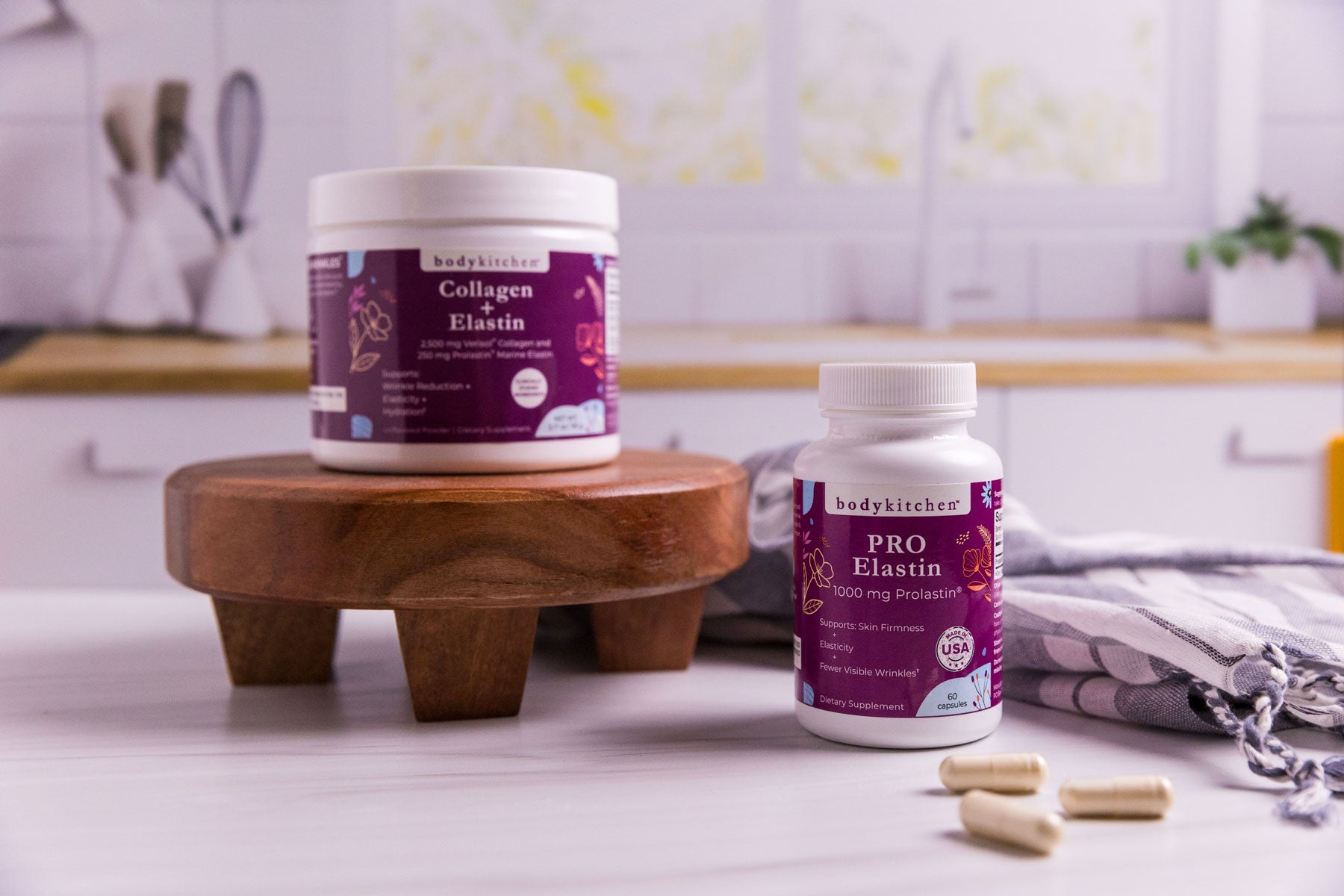
Collagen supplements have become one of the most popular beauty supplements, and for good reason. Collagen peptides can help support smoother-looking skin, stronger hair and nails, and the visible signs of skin aging. But did you know that collagen is only part of the story when it comes to the structure of our skin and cells? Elastin, another key structural protein, plays a critical role in skin health as well. It helps keep skin firm, soft and youthful-looking, and works closely alongside collagen to support overall appearance. Are elastin peptides missing from your skincare routine? Let’s talk about what elastin is, how Body Kitchen’s Pro-Elastin Peptides differ from collagen supplements, and how combining these two key proteins may offer a more complete approach to long-term skin health. What is elastin and why does it matter for skin health? Elastin is a structural protein found in connective tissues throughout the body. When it comes to skin health, elastin works alongside collagen to help maintain skin firmness, elasticity and resilience.1 An easy way to think about the difference is this: Collagen gives structure and support, like scaffolding on a building. Elastin allows skin to stretch yet retain its shape, like a spring. Whenever you smile, frown, chew or squint, elastin helps your skin return to its original shape. Unfortunately, as we age, our bodies slow down the production of this important protein. While we continue to lose collagen at a rate of about 1% per year starting in our 20s, elastin production peaks earlier in life and significantly slows by adulthood.2 Combined with everyday stressors such as pollution, environmental toxins, inflammation, poor sleep and oxidative stress, existing elastin fibers can break down over time. This contributes to sagging skin, loss of firmness and wrinkle formation. This is why targeting elastin is important for a more complete skin health routine. Without it, we may only be addressing one part of the skin aging equation. How Pro-Elastin Peptides work differently from collagen Many people assume that taking collagen peptides will support their skin health overall. While collagen provides exceptional support for skin strength, it does not specifically target the elasticity piece. This is where elastin peptides step in to help fill the gap. Collagen supplements typically work by supplying the body with collagen peptides, which are short chains of amino acids that support the structure and strength of skin, hair and nails. The focus here is primarily on firmness, density and volume.3 Body Kitchen’s Pro-Elastin Peptides, on the other hand, is designed to provide elastin peptides that support the elastin network that keeps skin elastic and flexible.4 So while both collagen and elastin are important, they play different roles. Even though collagen supplements are still all the rage, remember that they mainly address firmness and strength. Elastin is needed alongside collagen for skin elasticity and resilience. Both roles are important, but not identical. The benefits of targeting skin elasticity from the inside out One of the most effective ways to support the behavior of your skin cells is from within. While topical creams and serums can hydrate the outermost layer of the skin, they rarely penetrate deep enough to meaningfully support structural proteins like collagen and elastin. Oral supplements allow nutrients, such as elastin peptides, to be absorbed and used by the body to support deeper levels of skin health. Targeting skin elasticity from the inside out may support visible results such as:5 Reduced appearance of skin sagging: By supporting elastin fibers in the skin, elastin peptides can help promote a firmer, more lifted appearance in areas prone to losing elasticity, such as the eyes, neck and jawline. Fewer visible fine lines: Because elastin helps the skin snap back after movement, supporting elastin may help reduce the appearance of fine lines and wrinkles over time. Improved moisture and glow: Healthy elastin and collagen networks help create a strong skin matrix that supports hydration, smoothness and radiance. Adding elastin peptides to your skincare routine may help support skin’s youthful appearance from a cellular level rather than simply at the surface. This can support long-term benefits for skin elasticity and visible skin aging. Collagen and elastin together: A more complete approach to skin aging Choosing between collagen peptides and elastin peptides should not be an either/or scenario. They both play important roles and deserve a spot in your skin routine lineup. This is because collagen and elastin work as a team. Remember, collagen creates the firm foundation while elastin provides elasticity. If you only choose collagen supplements, you may get the strength without the underlying resilience. Strong skin can still sag, so targeting both structural proteins is key. When you combine high-quality collagen peptides with a premium elastin peptide supplement, such as Body Kitchen’s Pro-Elastin Peptides, you are supporting a more complete strategy for skin health. This combination approach helps support both firmness and elasticity in tandem. Final thoughts If your current skin health routine consists only of collagen supplements, you may be missing a key piece of the puzzle. Collagen supports skin by helping it look plump and firm, while elastin supports the taut yet flexible texture we are all after. By understanding the unique benefits of elastin and how it works hand in hand with collagen peptides, you can be better equipped to support skin aging from the inside out. Consider adding Body Kitchen’s Pro-Elastin Peptides to your skin health routine to help support the strength, firmness and elasticity your skin needs to bounce back. Frequently asked questions What are Pro-Elastin Peptides and what makes them different from a standard collagen supplement? Body Kitchen’s Pro-Elastin Peptides is a supplement formulated specifically to support elastin, the protein responsible for skin’s ability to stretch and spring back. While collagen supplements focus on providing structural support to improve firmness and volume, Pro-Elastin Peptides target a different but equally important protein that supports skin resilience and bounce-back. Many standard collagen supplements do not contain elastin peptides, making Pro-Elastin Peptides a distinct and complementary option for comprehensive skin support. What does elastin do for the skin and why does it decline with age? Elastin is the protein that allows skin to flex and return to its original shape after movement or compression. It works alongside collagen to maintain a smooth, youthful-looking appearance. As we age, elastin production slows and existing elastin fibers begin to degrade. This can lead to skin that appears looser, less resilient and more prone to fine lines in high-movement areas like around the eyes and mouth. Can you take Pro-Elastin Peptides and a collagen supplement together? Yes, and doing so may offer more comprehensive skin support than either supplement alone. Collagen and elastin are both essential components of the skin’s extracellular matrix, and they serve complementary roles. Collagen provides structure and plumpness while elastin provides flexibility and snap. Taking both together helps address the two primary structural proteins that decline with age, making this combination a smart choice for those focused on long-term skin health and resilience. How long does it take to see results from an elastin supplement? Results vary by person, but skin supplements are typically used consistently for several weeks before visible changes are noticed. Because the body supports skin structure gradually, patience and consistency are key. Pairing elastin supplementation with adequate hydration, sun protection and a nutrient-rich diet can also help support healthy-looking skin. Who should consider adding Pro-Elastin Peptides to their supplement routine? Pro-Elastin Peptides may be a strong fit for adults who notice that their skin has lost its snap or bounce, particularly those experiencing sagging, looser skin texture or fine lines in high-movement areas. It may be especially relevant for those who already take a collagen supplement and want to address the full picture of skin aging. For anyone focused on firmness, elasticity and long-term skin resilience, Pro-Elastin Peptides can help fill an important gap in their routine. References: https://pmc.ncbi.nlm.nih.gov/articles/PMC9827338/ https://pubmed.ncbi.nlm.nih.gov/40826844/ https://pmc.ncbi.nlm.nih.gov/articles/PMC8824545/ https://pmc.ncbi.nlm.nih.gov/articles/PMC10938029/ https://pmc.ncbi.nlm.nih.gov/articles/PMC8239663/

What Are Collagen Peptides and Why Are They More Effective Than Regular Collagen?
Collagen supplements and collagen peptides have become a staple in the beauty aisle. But with good reason. As one of the most abundant proteins in the human body, collagen plays a major role in the structure and health of our skin, joints, ligaments, tendons and connective tissues. But not all collagen supplements are the same. Product names such as collagen, powder, collagen peptides, hydrolyzed collagen peptides, and even collagen drinks are all discussed as if they are all the same. But the truth is, the form and the quality matters. Let’s take a closer look at what collagen peptides are, how they are made, and why products such as Body Kitchen’s hydrolyzed collagen peptides may offer more targeted support for your skin and overall health needs. What Are Collagen Peptides and How Are They Made? Collagen is a type of protein our bodies use to basically hold our skin and other tissues together. Think of it like the glue that provides structural integrity to not only the skin but also our bones, muscles, tendons, ligaments and blood vessels.1 But collagen proteins are actually quite large and complex, and so to consume them in their whole form would be incredibly hard to digest. The answer? We hydrolyze them. This process simply means we break the protein down into smaller fragments, which are called collagen peptides. Collagen peptides, because they are smaller, are much easier to digest. Our body can then use these smaller peptides to support collagen production throughout the body. Basically, hydrolyzed collagen peptides are more bioavailable, simply meaning we can absorb them more easily and efficiently.2 Why Hydrolyzed Collagen Peptides Are Better Absorbed Than Regular Collagen The main reason collagen peptides are considered more effective than regular collagen comes down to absorption. We’ve discussed that whole collagen is a very large protein. If we try to ingest it in its whole form, it is hard to absorb. Hydrolyzed collagen peptides, on the other hand, are much easier to absorb and get into the bloodstream because they are smaller and partly broken down into more “digestible” chunks. Research shows that after we take in collagen peptides, their specific amino acids show up in the bloodstream. And there’s even evidence that some of these peptides get absorbed as-is, meaning they can get to work right away repairing and strengthening skin and other tissues.1 Additionally, research suggests that having these amino acids traveling in the bloodstream can trigger our body into repair mode, enhancing the build-up of more collagen on top of renewing what we already have.3 All this to say, hydrolyzed collagen peptides, like what you find in Body Kitchen’s Youthful Beauty Advanced, is your best choice for optimal skin health. Key Benefits of Collagen Peptides for Skin, Joints and Overall Health Incorporating a high-quality collagen supplement into your daily routine may offer a number of science-backed health benefits. Some of these collagen benefits include: Radiant skin One of the more well studied collagen benefits is on skin aging and skin health. Studies have shown that collagen peptides can improve skin hydration which leads to less fine lines, wrinkles and sagging. Collagen may also improve skin elasticity and improve the thickness of the skin.4 Joint Repair and Mobility Our joints our cushioned by cartilage, which is made up mostly of collagen. As most of us know, this can wear down over time, leading to pain and mobility issues. Studies have shown that oral collagen peptides can improve joint health and reduce pain.5 Stronger hair and nails Collagen peptides contain a high concentration of proline, which is an important amino acid for building keratin. Using a high quality collagen powder may help improve both nail and hair strength.6 Bone strength Collagen is also rich in amino acids that help our bones. Studies suggest that collagen peptides may help improve bone density, especially when combined with calcium and vitamin D.7 How to Choose a Quality Collagen Peptide Supplement With so many options on the shelf, choosing the best collagen supplement can feel overwhelming. To make the best choice for your money, look for these key features: “Hydrolyzed” collagen peptides: Remember, hydrolyzed means it’s been broken down and is more digestible. Dosage: Most studies suggest doses of 5-10g of collage peptides daily for best results, so make sure the product has the amount that best fits your needs. Quality ingredients: Products such as Body Kitchen’s Youthful Beauty Advanced Powder will offer a blend of collagen sources as well as smaller peptides to maximize digestion. Supporting ingredients: Additional skin-boosting ingredients, such as resveratrol and hyaluronic acid, can enhance overall results and give you more value for your money. If you are looking for a premium, high-quality option that ticks all of these boxes, Body Kitchen’s Youthful Beauty Advanced powder is an exceptional choice. It is specifically formulated with a high concentration of small peptides and other skin-loving ingredients to ensure your skin and body gets the structural support it needs. Final Thoughts So, what are collagen peptides? They are a hydrolyzed, easier to absorb form of collagen that may offer significant advantages over regular collagen supplements. Because they are smaller and more soluble, hydrolyzed collagen peptides are easier to use and absorb. The biggest collagen benefits appear to be for skin hydration and overall appearance, but may offer support to joints, hair, nails and bones as well. And while using collagen supplements are not a quick fix, they can offer additional whole-body support alongside a nutrient-rich diet and other healthy lifestyle habits. Frequently Asked Questions What are collagen peptides? Collagen peptides are short chains of amino acids produced by breaking down full-length collagen protein through a process called hydrolysis. This process reduces collagen into smaller fragments that the body can absorb much more efficiently through the digestive tract. Unlike intact collagen molecules, which are too large to pass through the gut wall effectively, collagen peptides are rapidly absorbed into the bloodstream and transported to skin, joints, and connective tissue where they can support the body's natural collagen production. Why are collagen peptides more effective than regular collagen? Regular collagen is a large, complex protein that the digestive system struggles to absorb intact. Hydrolyzed collagen peptides, by contrast, are broken into smaller fragments with significantly higher bioavailability, meaning more of the active compound actually reaches the tissues that need it. Studies suggest that collagen peptides can stimulate fibroblast cells to produce new collagen and elastin, making them not just a passive nutrient but an active signal for skin repair and renewal. What do collagen peptides do for skin? Collagen peptides help support skin hydration, elasticity, and firmness by supplying the amino acid building blocks the body uses to synthesize new collagen. As collagen production naturally declines with age, supplementing with peptides can help slow the visible signs of aging, including fine lines, reduced skin bounce, and dullness. Clinical studies on hydrolyzed collagen have shown measurable improvements in skin moisture and elasticity after consistent use over several weeks. How long does it take for collagen peptides to work? Most users begin to notice improvements in skin texture and hydration within 4 to 8 weeks of daily supplementation, with more significant changes in firmness and fine lines appearing at the 8 to 12-week mark. Because collagen synthesis is a gradual biological process, consistency matters more than dosage. Taking collagen peptides daily alongside adequate vitamin C, which is essential for collagen synthesis, can help optimize results over time. Are collagen peptides safe to take daily? Collagen peptides are widely considered safe for daily use and are well-tolerated by most adults. They are derived from natural protein sources and carry a low risk of side effects when taken at recommended doses. As with any supplement, those who are pregnant, breastfeeding, or managing a medical condition should consult a healthcare provider before starting. Choosing a high-quality, third-party tested product ensures purity and consistent peptide concentration. References: https://pmc.ncbi.nlm.nih.gov/articles/PMC10102402/ https://pmc.ncbi.nlm.nih.gov/articles/PMC8944283/ https://pmc.ncbi.nlm.nih.gov/articles/PMC11094247/ https://pmc.ncbi.nlm.nih.gov/articles/PMC10180699/ https://pubmed.ncbi.nlm.nih.gov/34491424/ https://pubmed.ncbi.nlm.nih.gov/39021368/ https://pmc.ncbi.nlm.nih.gov/articles/PMC8441532/

Peptides are Trending Again—and Why They Matter More Than Ever
If you've spent any time scrolling through your social feeds or catching up on the latest health trends, you know that peptides are dominating wellness conversations. From weight-loss breakthroughs to high-tech anti-aging routines, peptides are officially the star of the modern wellness show. For decades, peptides were almost exclusively associated with hardcore bodybuilders looking for a shortcut to muscle growth and recovery. But here’s a little secret: peptides haven’t just suddenly materialized out of thin air. They have been around since forever, quietly supporting our bodies in extraordinary ways. Today, the science of peptides has gone completely mainstream, opening up a wide range of accessible health and wellness applications. These microscopic powerhouses are being studied for their promising contributions to weight-loss, addiction recovery and mental health. These exciting new horizons in science sit right on top of the already vast body of research related to the use of peptides for supporting flexible joints, healthier skin and fuller hair. What Exactly are Peptides? To understand peptides, you first have to get to know proteins. At their biological core, peptides are short chains of amino acids, which serve as the fundamental building blocks of protein molecules – the workhorses of our bodies. Think of individual amino acids as letters of the alphabet, peptides as short words, and proteins as entire chapters in a book. Because peptides are smaller versions of unbroken proteins, your system can absorb them effortlessly and put them to work efficiently, allowing them to communicate clear structural messages straight to your cells. From Anti-Aging Hero to Hazardous Villain Here’s a fascinating plot twist: peptides can be both “good” and “bad”. Some peptides act as vital protectors that help keep tissues firm, elastic and strong (thank you, collagen, keratin and elastin peptides!) Others, however, can trigger unwanted inflammation or block the normal functioning of systems if they are unbalanced. Scorpion venom is an extreme example of their diversity. It’s comprised of peptide-based neurotoxins that stun the nervous system of prey and rivals. So, just because a substance is a peptide doesn't automatically mean it belongs in your wellness routine. Types of Peptides Your body produces a diverse family of peptides constantly to maintain strength, balance and order across a multitude of internal processes. There are two main types of peptides: Peptide-based hormones are your body’s chemical messengers. They travel throughout systems communicating vital instructions and information. Famous examples include: Insulin – regulates your blood sugar Oxytocin – the “love hormone” that promotes bonding GLP-1 – the natural gut hormone that controls fullness and forms the basis of today's most popular weight-loss therapies. Structural peptides are biological “bricks” that act as scaffolding, promote tissue repair and give your body its physical shape. The ultimate structural trio includes: Collagen – found in skin, bones, ligaments and tendons for stability Elastin – found in skin, lungs and blood vessels for elasticity Keratin – found in hair, nails, outer skin layer and lining of vital organs for structure Inspired by these powerful, naturally occurring molecules, scientists are now creating advanced, targeted peptides. You may have heard people buzzing about BPC-157 (Body Protection Compound-157). While it sounds like a sci-fi experiment, it’s a synthetic peptide being studied for its potential to support gut health, balance inflammation, and reduce daily physical discomfort by accelerating blood vessel repair.* Some You Sip, Others You Inject Because of their unique "bite-sized" composition, your body naturally treats oral peptides as food. If a standard peptide hits your digestive system, stomach enzymes immediately start to break it down into the nutritional sum of its parts. This is exactly why metabolic and hormonal therapies like GLP-1 must be injected rather than consumed as a pill, capsule or powder. If you were to drink a liquid hormone peptide, your stomach acid would destroy it before it ever had a chance to reach your bloodstream and signal your brain. Also, hormone peptides inside the human body have an incredibly short lifespan. Many of them are active for only 90 seconds to two minutes before they are completely degraded by internal enzymes.* Because they vanish so quickly, your body has to work overtime, constantly producing fresh peptides around the clock to keep your systems running smoothly. A note on safety: because many injectable forms of synthetic peptides are still undergoing intense pre-clinical research, it’s important to speak to a healthcare practitioner before beginning any hormone-based peptide therapies. The Consumable Peptide Advantage On the flip side, food-based structural peptide formulas in the simple form of powder and capsule supplements have undergone decades of rigorous studies for safety and efficacy. This is especially the case for skin anti-aging benefits.* And while they may not seem novel, they are incredibly powerful. These scientifically tested formulas supply you with the bioavailable raw materials your body needs to rebuild itself from within. Our popular multi-source collagen di-peptide powder, for example, is designed to be broken down and rebuilt into new protein structures that support skin firmness, strong bones and healthy joints. Whether you’ve tried peptides supplements in the past or are hearing the term for the first time, the global headlines are right about one thing: peptides are the future of cellular health.

Chocolate Collagen Ice Cubes
It’s the time of year when you start craving iced coffee and other cold drinks instead of hot ones, and we have you covered with these creamy, chocolaty ice cubes. Not only are these ice cubes a delicious way to uplevel your cold brew, but they also add collagen protein to your day. Collagen protein helps balance other protein sources in the diet, supporting skin, hair, joints, tendons, bones, and digestive health.