Blog


Olive Leaf Extract Benefits: Antioxidant and Anti-inflammatory Properties
Olive trees have been valued for their healing properties for thousands of years. But their medicinal benefits go far beyond just the fruit itself; the health benefits of olives and olive tree leaves, in particular, have been known by Mediterranean cultures to possess strong antioxidant and anti-inflammatory support. And modern research is now catching up to show us that ancient wisdom was right. One of the main olive leaf benefits is a compound called oleuropein, which we now know is one of the superstars in olive leaf extract, possessing anti-inflammatory, antimicrobial and antioxidant powers.1 But there’s more. When we pair potent botanicals like olive leaf extract with nutrients that support bone health, which is what Body Kitchen offers in their Mega Osteo supplement, we can enhance and preserve bone strength even further.2 How? Let’s break down the science. Polyphenols Reduce Oxidative Stress Naturally The rockstar compound found in olive tree leaf extract is oleuropein, a polyphenol which research has shown delivers significant antioxidant support. One of the main jobs of polyphenols is to neutralize free radicals – unstable molecules that damage cells and can lead to chronic disease. Several recent studies highlight how olive leaf extract can fight this damage and help ward off metabolic diseases such as diabetes and heart disease. It may even help with bone density in post-menopausal women.2,3,4 This could be especially helpful for people navigating: Chronic inflammation Cardiovascular disease Metabolic changes during menopause High stress lifestyles Environmental or other chemical exposures But the best part? Olive tree leaf extract is right from nature’s medicine cabinet. While you always need to talk with your doctor first before using any natural compounds or extracts, natural antioxidant support from something as simple as olive leaves could be a great addition to your anti-aging routine. Why Olive Leaf Fights Inflammation Much like the antioxidant rich properties of olive oil, the polyphenols in the olive leaves themselves are just as potent. In fact, recent research is shedding more light on this incredible compound and just how powerful it can be in fighting inflammation and aging. A recent paper attempted to shed more light on the antioxidants in olive leaves, and what they found was insightful. While olive oil does contain a host of polyphenols, oleuropein included, olive leaves have these as well and in higher concentrations. When the researchers studied the compounds extracted from the leaves, they found that across the board, the host of antioxidants found in olive leaf extract helped provide support in:5 Anti-aging and improving cellular health Fighting infections, especially respiratory infections such as COVID Reducing blood pressure and improving cardiovascular health So for anyone looking to target inflammation through nutrition, olive leaf extract fits perfectly in a Mediterranean-diet style approach – rich in antioxidants, polyphenols, and anti-aging compounds. The Powerful Antioxidant Benefits Explained Antioxidants in olive leaf extract can help our bodies in a couple of primary ways. Anti-aging and Anti-cancer properties The polyphenols in olive leaves have been shown to help repair cells and prevent cellular breakdown. This could help ward off metabolic diseases and may even aid in the fight against cancer.5,6 Improving cardiovascular health Recent research shows that olive leaf extract may play a direct role in helping reduce blood pressure as well as managing lipid levels and improving cardiovascular function.7,8 Enhancing immune support According to researchers, the host of polyphenols in olive leaves can help reduce the risk and severity of infections. In particular, those with COVID-19 saw significant reductions in inflammation and had less chance of a “cytokine storm” which usually leads to a more severe illness.5 Olive Leaf Extract for Daily Wellness While olive leaf extract can clearly be used to ward off serious diseases, it can also be used for daily wellness, especially if you have family history of conditions such as diabetes, heart disease or cancer or are easily prone to seasonal illness. Consider adding olive leaf extract for: Seasonal immune support: Studies show olive leaves and their polyphenols can help enhance the immune response and prevent an intense inflammatory response.5 General cardiovascular health: Can help keep lipid levels healthy and blood pressure regulated.7 Daily anti-aging and cellular protection: The polyphenols in olive leaf extract, especially oleuropein, can help combat daily stressors from the environment and everyday life.9 Strong bones: Our bone strength can take a hit during menopause as inflammation levels rise. Consider adding Body Kitchen’s Mega Osteo which offers olive leaf extract alongside critical bone minerals for a daily support and a “strong” long-term foundation.2 Key Compounds that Support Immune Health Olive leaf extract provides a whole array of compounds that have been found to be very supportive to the immune system. One group, called secioridoids, of which oleuropein is part of, have demonstrated anti-viral properties in research studies. In fact, they have been studied as helpful against many types of infections, from HIV to COVID to seasonal flu strains.10 Additionally these compounds tamp down the inflammatory response, helping the body to not overreact and cause more damage than good. And while olive oil is known to have these compounds as well, they are found in more concentrated doses in olive leaf extract. Make sure to keep this natural remedy in your back pocket for seasonal wellness! Final Thoughts Olive leaf extract benefits go far beyond ancient wisdom. Now modern research shows that the incredible polyphenols in olive leaves can help with reducing inflammation, improving the immune system, and slowing cellular aging. And for those looking to support bone strength, joint health and lowering inflammation on all fronts, pairing potent antioxidants like olive leaf extract with targeted nutrients, such as those found in Body Kitchen’s Mega Osteo, can help you form a comprehensive, science-backed approach to optimal wellness. Of course, always talk with your doctor first before adding any new supplements to your routine, but a healthy diet plus extra polyphenol support may just be that extra bump your bones and body could really use this season. References: https://pubmed.ncbi.nlm.nih.gov/33334001/ https://pubmed.ncbi.nlm.nih.gov/27472350/ https://pubmed.ncbi.nlm.nih.gov/31746508/ https://pubmed.ncbi.nlm.nih.gov/34042426/ https://pmc.ncbi.nlm.nih.gov/articles/PMC10451521/ https://pubmed.ncbi.nlm.nih.gov/37599941/ https://pubmed.ncbi.nlm.nih.gov/40325976/ https://pubmed.ncbi.nlm.nih.gov/36271405/ https://pubmed.ncbi.nlm.nih.gov/36613822/ https://pubmed.ncbi.nlm.nih.gov/36319585/

Spiced Chai Latte with Collagen + Elastin
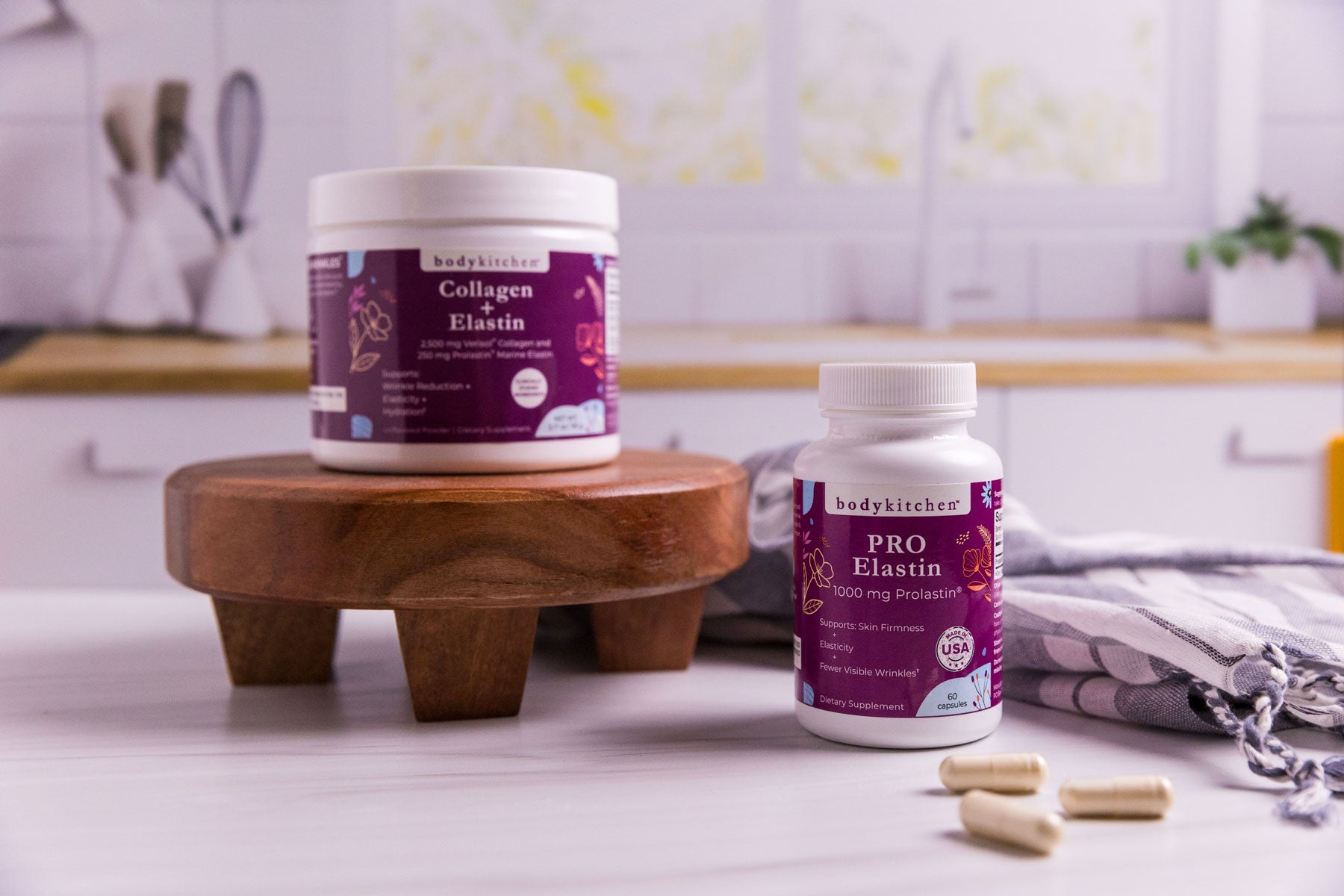
Get cozy with this spiced chai latte with a very special ingredient, Body Kitchen Collagen + Elastin Powder. This powder contains vitamin C, collagen, elastin, and hyaluronic acid for skin firmness, elasticity, and hydration. Sip your way to better skin!

Why a Women’s Multivitamin May or May Not Be All I Need to Take Daily
For most of us women, taking a simple women’s multivitamin seems like a no-brainer for meeting our daily nutrient needs. But truth be told, even the best women’s multivitamin might not be a one-stop shop for everything your body needs. Some women may actually need something more customized depending on your health goals, medical conditions and even genetics. Let’s take a look at what nutrients might be missing in your lineup, how absorption can vary, and how key ingredients, including ones such as Optifolin and Vitacholine, can make a huge impact on your health. What is Optifolin & Vitacholine, and Why Do I Need Them? Optifolin+ is a patented form of active folate, 5-methyltetrahydrofolate (5-MTHF), which is an important molecule used in critical reactions throughout the body. Our body can typically take the folate we ingest from food and turn it into this active form, but for somewhere between 20 - 40% of the population, they may have a genetic mutation that reduces this ability.1 Women with this mutation have much less active folate available for things like DNA synthesis, cell renewal and heart health. A recent study showed that Optifolin was much more bioavailable in the blood than regular folic acid, showing it might be a better form for those who have genetic barriers to proper folate absorption.2 VitaCholine is another patented nutrient that is missing in many women’s multivitamins. Often overlooked, research shows that choline plays vital roles in fetal development, liver health and brain function. While there are several decent choline-rich food sources, studies suggest most women fall short of meeting their needs.3 Together, both Optifolin+ and Vitacholine can enhance a women’s multivitamin from one that provides just the general basics to a one that specifically targets the unique needs of women’s physiology and genetics. If you are in the market for a high-quality women’s multivitamin, check out Body Kitchen’s Women’s Multi which offers these key, patented nutrients plus so much more. Missing Essentials: Nutrients Rarely Found in Standard Multis Most women’s multi vitamins on the shelf hit the basics – Vitamin C, Vitamin A, Vitamin K, iron, and B vitamins – but leave out many premium ingredients that are targeted at deficiencies unique to some women. Alongside choline and methylated folate, some others include: Vitamin K2: Many women’s multivitamins might throw in some vitamin K, but it’s specifically vitamin K2 that research suggests is best for bone health.4 Omega-3 fatty acids: We know omega 3’s are incredibly important for reducing inflammation, and yet many women’s multivitamins don’t include them. Sometimes it’s simply a matter of space within the vitamin itself, so take as an add-on to get the right daily dose. Potassium: Your body needs this electrolyte mineral for almost everything it does, but especially for the heart, muscles and nerves. But because high doses can be dangerous for some people, doses in multis tend to be low or non-existent. Consider supplementing separately if you need this important nutrient daily or just as needed.5 Calcium & Magnesium: Both of these are larger minerals and simply hard to fit enough into a standard women’s multivitamin. So don’t fret if they are not in your favorite multi. Take separately so you can get just the right dose and spread throughout the day as needed. When Your Genetics Block Multivitamin Absorption Our genes can have a surprising impact on how we absorb, transform and utilize nutrients in our body. Normally acting as the master blueprint for helping us properly use nutrients from food, some of us have abnormal genes that reduce our ability to process key vitamins. Beyond the genes for MTHFR and folate metabolism, we also have genes that affect how are bodies can use:6 Iron Vitamin D Vitamin C Vitamin A B12 This means what while you may take an array of supplements, what you absorb may be entirely different from someone else. For someone with these altered genetic pathways, even the best women’s vitamins may not work. If you are someone that continues to have deficiencies despite supplementation, talk with your healthcare provider about additional testing that may help uncover the true cause. A simple change to more active forms of these nutrients could make all the difference. The Iron and Calcium Balance for Different Ages These two minerals are tricky because while they are top priority for many women, more is not always better, and it can vary depending on your age and stage of life. Reproductive years: Iron needs increase during menstruation and pregnancy while calcium is a nutrient of concern for proper bone strength in adolescence and for the fetus during pregnancy. Pre and Postmenopausal: The menopausal stages typically require less iron due to menstruation changes, but calcium needs remain high as bone strength starts to take a hit from estrogen loss. While you might consider supplementing with both of these nutrients at some point in life, it’s important to remember these are vitamins not to take together!7 They compete for absorption, so taking them separately by several hours will avoid that battle. And ff you are wondering, what vitamins can I take together daily? It’s definitely these three: Vitamin D3, K2 and calcium. These three amigos work to not only get calcium in the bloodstream but then direct it to the teeth and bones.8 So make sure to choose a well-rounded women’s multivitamin that has these two helpers to go alongside your dose of calcium. How to Build a Custom Stack for Optimal Health The right women’s multivitamin can be a key part of your overall nutrition plan, but remember, it can’t always offer everything you need. Create a custom stack that truly supports your unique needs and lifestyle. Consider these steps: Start with a well-rounded women’s multivitamin. We suggest Body Kitchen’s Women’s Multi which comes with Optifolin+ and Vitacholine, along with vitamin K2, D3 and a whole host of other necessary vitamins and minerals. If you current multi doesn’t already have vitamins D3 and K2, find one that does or add separately. Boost with omega 3’s (DHA and EPA) daily for cardiovascular and anti-inflammatory support. Consider extra calcium and magnesium separately as these often can’t fit into a standard women’s multivitamin. Also forms and doses can vary based on individual needs. Consider gut-supportive nutrients such as probiotics and fiber if you aren’t able to get these from diet alone. Final Thoughts A daily women’s multivitamin can be a great start to rounding out your supplement plan, but for some, especially those with genetic limitations, additional support may be needed. High quality women’s vitamins using researched, premium ingredients may be needed to get actual results you can see and feel. But let’s not forget, supplements can never replace a balanced and colorful diet rich in whole, unprocessed foods. Even the best women’s multivitamin is just nutritional insurance; our daily food choices still make the foundation. If you feel like you need that extra support, level up to Body Kitchen’s Women’s Multi which is specifically designed to support women, at every age and stage. References: https://www.ahajournals.org/doi/10.1161/circulationaha.114.013311 https://pmc.ncbi.nlm.nih.gov/articles/PMC12499688/ https://pmc.ncbi.nlm.nih.gov/articles/PMC12346485/ https://ods.od.nih.gov/factsheets/VitaminK-HealthProfessional/ https://ods.od.nih.gov/factsheets/Potassium-Consumer/ https://pmc.ncbi.nlm.nih.gov/articles/PMC6014201/ https://pubmed.ncbi.nlm.nih.gov/38969940/ https://pubmed.ncbi.nlm.nih.gov/32972636/

Why Should I Take Mega Folate Plus When Pregnant?
Did you know that pregnancy is one of the most nutritionally demanding times in life? It’s incredible that the female body has this beautiful ability to create another human being from scratch! But surprisingly, research suggests most pregnant women are not meeting nutrient recommendations during this key period.1 While all micronutrients are important, two of the most critical are choline and folate during pregnancy. Both play pivotal roles in both neural tube formation and brain development. But maybe you are wondering, what is choline? Do I really need a choline supplement? Or, is folate or folic acid better pregnancy? Let’s dive into these questions and more so you can better understand if Body Kitchen’s Mega Folate Plus is for you, and for that reassurance you have all the tools you need for your best pregnancy. Does Mega Folate Plus Really Support Prenatal Health and Neurological Development? The short answer is, yes! The premium forms of choline and folate offered in Mega Folate Plus absolutely support the body early in pregnancy during neural tube development. This process eventually forms the brain and spinal cord, so nutrition is key in these early stages! While a lot of credit has been given to folate during pregnancy, research has shown that choline plays an equally important role in this vital process.2 Unfortunately, research also shows that upwards of 90% of women of childbearing age do not get enough choline from their diet.3 And even though folate is easy to get because we fortify many food products, it also can be low, especially if women have genetic mutations that decrease their ability to make the active form our body needs for fetal development. And that’s why we formulated Mega Folate Plus. It combines the bioactive forms of folate, methyl-folate or 5-MTHF, with Vitacholine, a highly bioavailable source of choline, for optimal support during pregnancy. Active Folate vs. Folic Acid: Why Bioavailability Matters Is folate or folic acid better for pregnancy? While we often use these terms interchangeably, the difference between folic acid and folate in pregnancy actually matters. Folic acid is a synthetic form of folate. Because it’s relatively stable and inexpensive, it’s a go-to for most supplement companies. Unfortunately, folic acid requires extensive conversion in the body to be transformed into the active form, 5-MTHF. However, somewhere around 40% of women have a mutation that limits this conversion.4 That means if you have this MTHFR mutation, you may not have adequate levels of active folate in the bloodstream. This is why BodyKitchen’s Mega Folate Plus uses Optifolin+, a patented form of folic acid that is active and doesn’t need any conversion to start doing its job. This ensures that you and your baby get the right amount of folate for things like:5 Proper formation of the neural tube early in pregnancy DNA and red blood cell formation Placental and cellular growth So clearly, bioavailability of folate in pregnancy does matter. Talk with your doctor if you are concerned your current supplements are not up to the task. Choline’s Role in Fetal Development and Cognition So, what is choline? And why is this overlooked nutrient making waves in women’s health? Choline is a nutrient that plays a role in many avenues of health:6 Neural tube formation Fetal memory development DNA and gene regulation Cardiovascular health Reducing risk for fatty liver Maintaining healthy cell membranes Specifically when it comes to choline for pregnancy, we know that choline plays a key supporting role in the first trimester, working alongside folate in forming the neural tube. But studies also suggest choline plays an equally important role in the 3rd trimester, being a crucial element to proper brain formation and specifically related to cognition and memory development.7 Yet as we’ve seen, most women are not meeting the recommended intake levels, which are currently set at 450 mcg per day for pregnant women. This can be met by including more choline rich foods daily. Foods high in choline include eggs, beef, milk, broccoli and eggs. But for vegetarians, vegans and picky eaters, this can be tough. This is where again, BodyKitchen’s Mega Folate Plus shines. By using Vitacholine, a patented and highly absorbable form of choline, you can confidently meet your needs for choline in pregnancy without stress or worry. Methylation Support: Protecting Your DNA and Cellular Health Methylation may sound like a technical term, but it refers to a fundamental process our bodies use for DNA regulation. Sort of like an on/off switch, methylation helps our DNA activate when needed and shut down when not. Interestingly, proper methylation requires both folate and choline, which donate methyl groups to aid in this process. During pregnancy, methylation is crucial for: Fetal growth and neural development Proper placental functioning Regulating genes that reduce the risk for birth defects and other pregnancy complications And of course, these methylation functions continue far beyond pregnancy. Our bodies continue to benefit from the hard work of both folate and choline in keeping our cells functioning as they should and protecting and repairing our DNA. Beyond Neural Tube Defects: Full Prenatal Benefit While both choline and folate’s claim to fame are their benefits for neural tube development, they clearly offer so much more during this critical window of fetal development. These nutrients also help with red blood cell formation, promoting rapid cell growth, supporting proper liver function, and providing key support for brain development. And because these folate and choline benefits happen during various points during pregnancy, both early and late in the process, staying on top of these nutrients all throughout your pregnancy is important! Final Thoughts Adding a pre-natal vitamin is a great first step in overall pregnancy nutrition, but don’t stop there. For some, extra support in a few key areas is vital. “Active” vitamin forms may be more appropriate for some women who have genetic variants or known deficiencies that need targeted attention. This is why BodyKitchen’s Mega Folate stands out. With Optifolin+ and Vitacholine, both patented and highly absorbable forms of both folate and choline, it fills two of the most critical gaps in prenatal nutrition – supporting neural tube formation and brain development, from day one. Of course diet always comes first, so make sure to include choline rich foods and foods high in folate during pregnancy. By pairing a balanced diet with the right supplements, you can rest assured you are giving your baby the best start. References: https://pmc.ncbi.nlm.nih.gov/articles/PMC9182711/ https://pubmed.ncbi.nlm.nih.gov/40362867/ https://ods.od.nih.gov/factsheets/Choline-HealthProfessional/ https://www.ahajournals.org/doi/10.1161/circulationaha.114.013311 https://pubmed.ncbi.nlm.nih.gov/32868164/ https://pmc.ncbi.nlm.nih.gov/articles/PMC8235569/ https://pubmed.ncbi.nlm.nih.gov/29217669/

Feel Beautiful and Confident As You Age
Have you experienced “that” moment—you look in the mirror and feel disconnected from the person staring back? Deepening laugh lines and undereye pockets distort the image in your mind. Hair loss forces a style that is not your own. No wonder many people describe the feeling as an assault on identity. It’s human to have a push-pull relationship with aging. Seeing your appearance change before your eyes creates internal conflict between feeling young and confident in your skin, and the reality that looks change. Don’t let youth-obsessed self-talk affect your self-esteem. By redefining what “aging well” means, you can bridge the gap between how you feel and what you see by directing your energy to where it counts. Beauty and Aging: What Science Reveals Research from all over the world validates what we know deep inside—losing our youthful appearance feels like a bona fide loss. For some, the impact of aging skin alone can lead to anxiety and social isolation, and poor self-image has been linked to chronic illness and fewer preventative actions. * * But research also delivers good news. In fact, it’s remarkably comforting, revealing that we are far more resilient about accepting our wrinkles and embracing our wisdom without feeling like it’s a trade-off. And this is especially true when we prioritize building strength, radiance, and resilience. “Feeling” Younger Is Good for Your Health Confidence stems from how you feel inside, not how you look. This is according to a University of Oklahoma survey published in the journal Psychology and Aging. A whopping 59% of Americans aged 50–80 displayed healthy self-confidence regardless of their age for one reason: they believed they look younger than others their age. * These self-assured, confident individuals expressed positive feelings toward aging and felt a strong sense of purpose compared to adults surveyed who believed they look older than their peers. This is promising, because adopting healthy habits not only influences the trajectory of your aging process, it changes how you look and feel about yourself—and they’re fully within your control. Evidence-Based Strategies for Looking and Feeling Younger In a culture that prizes looking young, it may be tempting to chase cosmetic fixes. But youthful vitality is the result of caring for your skin, hair, muscles, and mind from the inside. Radiant Skin There’s no magic wand that prevents wrinkles or sagging, but science supports giving skin a makeover from the inside by reinforcing its structure. The dermal matrix is the scaffolding that comprises skin’s firmness and elasticity, so this is the best place to start. This network of collagen and elastin fibers is responsible for the 3 S’s of radiant skin: smoothness, suppleness, and snap. That’s why a high-quality collagen and elastin supplement is an integral part of any anti-aging skincare routine, as multiple clinical studies indicate that oral supplementation supports skin elasticity, hydration, and firmness. (One to try: Body Kitchen Collagen + Elastin is formulated with vitamin C to replenish skin’s vital proteins while supporting natural production.) But these crucial proteins don’t work alone. Vitamin C has been found to be the key to unlocking younger-looking skin with less wrinkling and dryness. * Vitamin C has been identified as a pro-collagen and pro-elastin nutrient, which means the body cannot produce these structural proteins without it. Fuller, Thicker Hair The hair on our scalp has no biological function. So how is it that losing our hair can disturb our self-esteem and body image so profoundly? To the 50% of women (and 80% of men) who experience noticeable hair loss, the blow to identity is crushing. By rebuilding hair’s keratin structure at the cellular level, you can create a more nourishing scalp environment for hair follicles to grow thicker, longer, and stronger. Dietary proteins like collagen and elastin, along with micronutrients such as biotin, vitamin D, and iron, help synthesize keratin—the protein that comprises 80–90% of hair strands. Keratin is the rigid protein that smooths the cuticle for shiny, frizz-free hair. A stronger, healthier scalp structure also helps to increase hair’s resistance against chemicals and heat styling, which can further damage follicles. You can improve the condition of your scalp by consuming protein-rich foods, a variety of fruits and veggies, and supplementing with a high-quality collagen and elastin powder. Stronger Muscles The upside of aging is that we start to prioritize strength, function, and vitality over skin-deep vanity. Our musculoskeletal system—the muscles, bones, and connective tissue that are the driving force behind power and mobility—has greater influence over the quality of aging than we originally thought. Strength training helps to increase lean muscle mass as we age, which decreases by 3–8% per decade after age 30. * While all exercise is beneficial, resistance workouts are truly the “magic pill” that keeps us active and vibrant as we age, and according to studies, it may increase healthy lifespan by four years. * And, a bonus benefit is that it can increase skin density by stimulating collagen production. * Beyond boosting appearance and body shape, building muscle and strength are associated with a healthier metabolism, lower cholesterol, and stronger bones. Healthy Mindset Your attitude about aging is perhaps the most important tool for having unshakable confidence. Rather than viewing aging as a loss, a positive mindset reframes the journey as a process of growth, resilience, and self-understanding. Research shows that people with healthier perceptions of aging report higher self-esteem, better health behaviors, and longer lives. In one Yale study, older adults with positive self-perceptions of aging lived an average of 7.5 years longer than those with negative views. * This outlook promotes proactive self-care and reduces social comparison, allowing confidence to arise from purpose and authenticity rather than youthfulness. Embracing aging as evolution—not loss—strengthens both mental well-being and everlasting confidence that radiates from within. The goal of aging well isn’t about erasing time—it’s about giving your body the power to be strong, active, and resilient. Celebrate the fall harvest with 20% OFF all Body Kitchen healthy aging formulas—with code FALL20. New Subscribe & Save customers enjoy bigger savings with 30% OFF your new subscriptions.

Collagen + Elastin Halloween Smoothie
This Halloween, sip your way to glowing skin with the Jack-O-Lantern Glow Smoothie—a bright pumpkin-mango blend powered by collagen and elastin peptides. Rich in beta-carotene and antioxidants, it supports firmness, elasticity, and hydration while serving up cozy fall flavor in every sip.

Fall into the Season’s Top 5 Superfoods
It’s that time of year when pumpkin spice makes its way into anything you can dream of, from the tasty array of breads, pastries, and beverage offerings you’ve come to expect, to whimsical and unexpected offerings such as cream cheese, cooking oils, and even biscuits for our furry friends. When stripped down of sugar and artificial flavors, pumpkin and its companion spices have a lot to offer in terms of health benefits. And, they only make up a small portion of fall’s healthy harvest. Autumn’s color palette, rich in red, orange, yellow, and green, is not only cheerful and vibrant – it hints at the oxidation-fighting phytochemicals that give these glorious superfoods their nutritional punch. Let’s dig into five iconic flavors of fall that are cherished and available in nearly every region of the country, and why they’re as health-boosting as they are mouth-watering. #1 Apples There are so many varieties of apples available to give you just the right amount of sweet, tart, or acidic that your dishes and desserts call for. This classic lunchbox favorite is highly versatile, adding juicy tartness to a savory salad, or deliciously sweet texture to a crisp or pie, depending on the variety. Apples are loaded with fiber, especially a soluble type called pectin that promotes healthy gut bacteria and digestion, cholesterol and blood sugar balance, and helps flush toxins. They are loaded with vitamin C, an antioxidant that fights free radicals and is a cofactor in many biological processes, such as collagen production. Apples are also a rich source of quercetin, a powerful inflammation-fighting flavonoid found in the skins. So don’t peel it off! #2 Gourds The jack-o-lanterns that light up the night on Halloween are made bright by an abundance of carotenoids, the group of yellow/red antioxidants also found in carrots, sweet potatoes, bell peppers, and mangos. When temperatures drop and shorter days don’t hinder chlorophyll production, a biochemical reaction turns these carve-worthy pumpkins from green to orange. The best-tasting pumpkins are not the best for carving, however. For delicious meals, go with the much smaller varieties of gourds grown for consumption, which also provide bone-boosting minerals, including calcium, magnesium, and potassium. But you can eat your jack-o-lantern’s seeds! Just scoop, separate, and lightly toast in the oven to dry. #3 Pumpkin Spice The medley of aromas and flavors behind the signature flavor that makes you feel warm and cozy is comprised of cinnamon, nutmeg, allspice, cloves, and ginger. And each one contains powerful compounds that help to improve different aspects of your health in really big ways. Just one tablespoon contains 37 mg of potassium and 6% of your daily value of iron. Cinnamon helps to balance cholesterol, blood sugar, and blood pressure. And cinnamon and nutmeg have a high concentration of salicylic acid, an anti-inflammatory compound used to fight skin breakouts and support smooth skin. Allspice and ginger have qualities that can improve digestion and immune system function. And cloves contain bone-healthy manganese and natural antimicrobial properties. #4 Pomegranates With its berry-red color and refreshing sweetness, you might think that this superfood all-star is a summer fruit. But the peak of pomegranate season runs roughly from September to January. The peel and seeds boast sky-high levels of ellagitannins, one of the most potent polyphenols known, which you consume when you drink whole fruit-pressed juice and eat the seeds enveloped within the sweet pulp. Ellagitannins are broken down in the gut into compounds that support a healthy balance between good and bad bacteria, known as the gut microbiome. And your skin microbiome also benefits. One study shows that drinking pomegranate juice creates a natural, protective skin shield against age-accelerating free radicals caused by excessive UV exposure. #5 Brussels sprouts These bite-sized cruciferous veggie balls are brimming with a variety of essential vitamins, including vitamin A to support firm skin and healthy eyes, vitamin C to boost winter immunity, and vitamin K, a key nutrient that works with vitamin D to improve bone strength. Like all cruciferous veggies, Brussels sprouts are high in sulfur, which contributes to their signature bitter taste and strong smell. But they’re worth it, because the compounds responsible, glucosinolates, have been shown to help protect cells from serious mutations, as well as promote cardiovascular health. Whether you’re preparing hearty fall comfort foods or planning your Thanksgiving menu, you can make November the healthiest month of the holiday season with flavorful combinations that warm your belly and benefit your body from head to toe.

What You Must Know About America’s Sweet Addiction
This is the time of year when dishes of candy and trays of treats become fixtures in our homes and workplaces, making it nearly impossible to resist the temptation. Sugar season is in full swing. This iconic US binge festival starts with bags of Halloween candy and is curbed (temporarily) with New Year resolutions, during which we put good choices on pause in favor of consuming the year’s highest levels of processed sugar. This is in addition to the handfuls and helpings of sweets consumed outside of our usual patterns of sugar consumption. For instance, most store-bought food staples and snack items are loaded with hidden sugar, such as ketchup, flavored yogurt, cereal, sauces and salad dressings. How Much is Too Much? In the US, we consume an average of 17 teaspoons of added sugar daily, and this includes adults and children, according to the Centers for Disease Control and Prevention.* What’s the recommended daily limit of added sugar? Just 12 teaspoons. Sugar is naturally occurring in some foods, such as fruit and starchy vegetables (fructose) and dairy (lactose). There are also naturally derived sweeteners such as honey and maple syrup. As part of a clean, healthy and balanced diet, these sugars are not unhealthy in their raw form and in small amounts. In fact, they supply glucose that cells burn for fuel to keep you energized. The problem is the overconsumption of added sugar, especially the highly refined kind in the form of corn syrup that’s found in so many of the commercial chocolates, candy, bakery goods and beverages sold in the US. Some natural sugar alternatives do have qualities that would make them more favorable to refined table sugar and high fructose corn syrup. For example, honey ranks lower on the glycemic index. But the guiding principle is that consuming too much added sugar regardless of the source can open up Pandora’s box of health issues. The Heavy Cost of Being Hooked on Sugar It comes as no surprise to anyone that consuming processed sugar in excess is harmful to our health, leading to a range of possible issues, including tooth decay, obesity, type 2 diabetes, heart disease and high blood pressure. A staggering 30% of American adults are overweight and 42% are obese; and in children, the rates are 16% and 19%, respectively.* And, between 2017-2020, a whopping 48% of American adults had some form of cardiovascular disease.* Here’s something to keep in mind this sugar season: overconsuming sweets can increase your risk of catching a cold or flu virus, by triggering inflammation and suppressing immune function.** But there’s an even greater price to pay for overly indulging in sugary delights. Adults who are obese spend about $1,500 more in healthcare costs annually compared to normal weight adults.* And obesity is one of the top contributors to diabetes and metabolic conditions. According to an American Diabetes Association report, people with diagnosed diabetes account for 1 in every 4 healthcare dollars spent.* Tips to Reduce Sugar Consumption You don’t have to kick sugar to the curb completely to be healthy and reduce your cardiometabolic risk factors. Just curbing the amount of added sugar you consume and shifting your mindset around the sweet stuff can make a major difference in how you look and feel. Reduce gradually – Start by reducing the amount of added sugar you consume. If you normally add two teaspoons of sugar to your coffee, cut back by ¼ teaspoons every week until you reach one teaspoon. Or, if you treat yourself to a bowl of ice cream at night, scoop just a little less than your normal serving. Shrink drink sizes – Sugary beverages are one of the major contributors to obesity. Research shows that the added sugars in soft drinks may have a direct effect on blood pressure.* If you’re not ready to give up flavored drinks during meals, cut your beverage portions in half. Make it special – Start to think about sugary items as occasional treats. If you snack on sweets during the day, choose only one time a day to indulge in a small portion. Or, limit treats to 2-3 days per week. And take the time to savor the flavors and textures mindfully without multitasking or distractions. Read labels – Check food labels on all processed foods to identify the amount of added sugar they contain, which appears under carbohydrates and is measured in grams (about 4 teaspoons = 1 gram). Also, read the list of ingredients. If sugar or high fructose corn syrup is one of the first three ingredients, the food is high in sugar. Get reacquainted with natural sugars – Retrain your palate to appreciate the natural fructose in fresh and dried fruit. A small bowl of berries with a dollop of real whipped cream makes a delightful dessert, plus adds filling fiber and nutrients you won’t find in traditional desserts. Alternatives and natural solutions Sugar addiction is extremely common and hard to kick. But it is possible to find balance by making healthier choices. For example, experiment with dessert recipes that are lower in sugar and use higher quality, more flavorful ingredients. For a healthier dessert that’s gooey, chocolaty and delicious, try our collagen protein-packed Cookie Dough Balls. It’s a yummy cookie batter that you don’t have to bake, and the healthy fats will keep you satiated so you don’t overdo it. And, because soft drinks and sugary beverages are believed to drive up blood pressure, try making unsweetened or lightly sweetened tea at home so that you can monitor the amount of added sugar.

Hair Benefits of Collagen, Keratin, Elastin, and Biotin
Everyone’s hair needs a little extra help sometimes. Most of us reach for shampoos, conditioners, and other hair treatments to ensure strong, healthy locks. While hair treatments like this can offer cosmetic improvements, thick, silky hair comes from within. Good nutrition is the key to beautiful hair. To ensure that your hair gets everything it..